
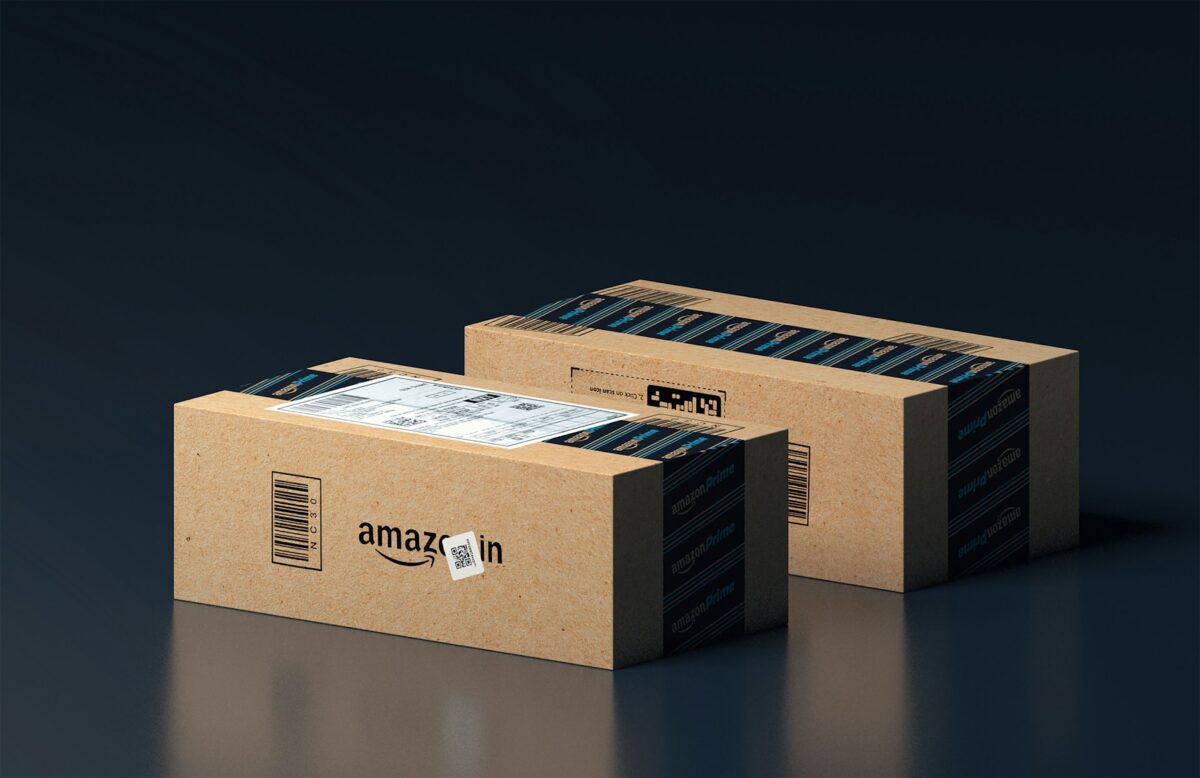
Amazon will invest more than €10 billion to expand and modernize its European fulfillment network, as the company pushes deeper into robotics, faster delivery and AI-supported logistics.
The company said the investment will support fulfillment centers, delivery infrastructure and new automation systems across Europe. Amazon also plans to add 25,000 jobs in the region over the coming years.
The announcement comes as e-commerce competition shifts from price alone to delivery speed, warehouse efficiency and the ability to move goods closer to customers.
Fulfillment centers move to the core of Amazon’s Europe strategy
Amazon’s investment is focused on fulfillment centers, the large logistics sites where orders are stored, picked, packed and moved into the delivery network.
The company says the money will be used to upgrade existing facilities and expand the use of new robotics systems. The goal is clear: shorter processing times, faster parcel movement and lower operational friction.
For Europe’s e-commerce market, this is a direct signal. If Amazon can shorten delivery windows further, competing platforms will face greater pressure to match its logistics standards. Same-day and faster delivery services are already becoming a stronger part of the retail battlefield in large urban markets.
Robotics becomes a cost and speed tool
Amazon also introduced a new version of its Proteus warehouse robot. The company says the robot can understand natural language commands and make more independent decisions on tasks, routes and timing inside fulfillment centers.
Amazon is also expanding STARK, a robotic tote-handling system first tested in Barcelona. The company plans to roll it out to 15 European sites by 2027.
This is not only a technology showcase. For Amazon, robotics is becoming a direct operating tool. It helps the company increase delivery speed, manage peak demand and keep logistics costs under tighter control.
New jobs, but different jobs
Amazon’s plan to add 25,000 jobs should be read together with its automation push. The company is expanding its workforce while also putting more robots into its warehouses.
That points to a shift in the structure of logistics employment. Some repetitive physical tasks may move further toward automation. At the same time, demand could rise for roles linked to maintenance, mechatronics, workflow monitoring, quality control and operations management.
The labor question will not disappear. In Europe, unions and regulators are likely to keep watching how automation affects working conditions, job security and productivity targets inside warehouses.
Faster delivery remains the main commercial target
Part of the investment will go into faster delivery infrastructure. Amazon plans to open more than 25 new sub-same-day delivery locations across Europe.
These sites bring storage, order preparation and delivery closer together. The aim is to reduce delivery times to a matter of hours in selected markets.
Amazon Now is also expanding in the UK, including Manchester and Birmingham. The service targets ultra-fast delivery for groceries and everyday consumer goods.
Capital spending is still rising
Amazon’s Europe logistics investment fits into a broader capital spending cycle. The company is increasing investment in AI, automation, cloud infrastructure and delivery capacity.
For investors, the main question is whether these heavy expenditures will translate into stronger efficiency and margin gains.
For Europe, the impact is wider. This is not just another e-commerce expansion. It is a logistics investment that touches warehouse technology, last-mile delivery, labor markets and the next phase of retail competition.