
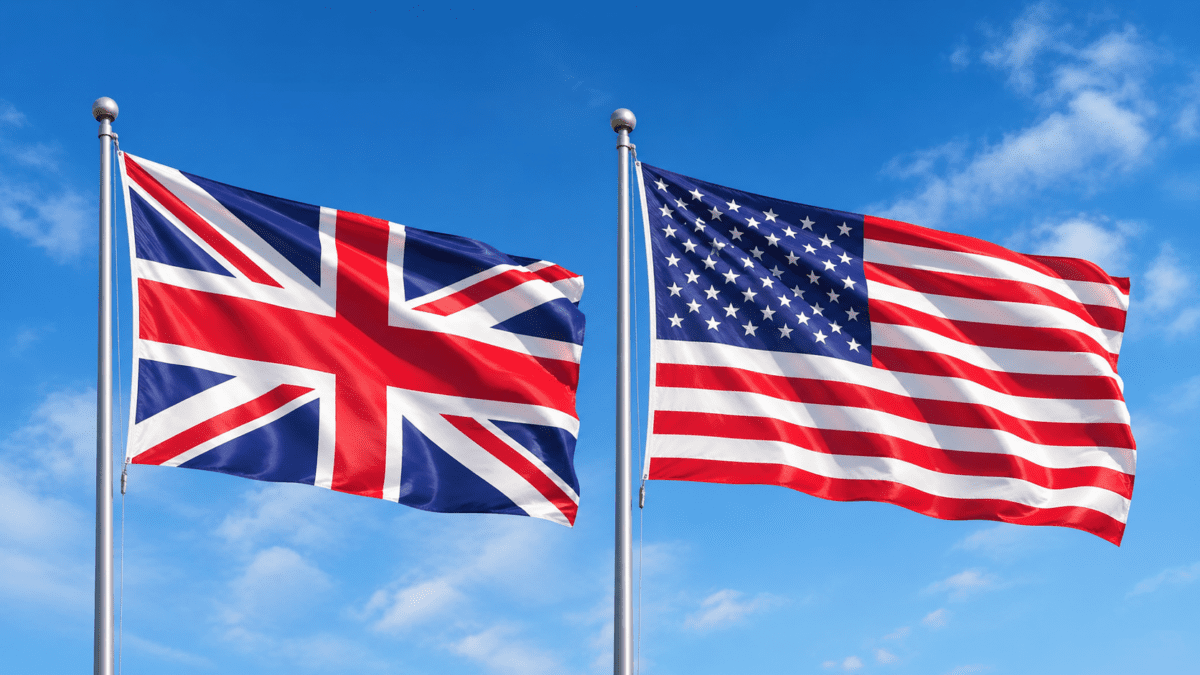
Under Donald Trump, the old language of the “special relationship” remains useful in speeches and ceremonies. But the working relationship now looks more transactional. Trade, tariffs, digital taxes, defense spending and foreign policy alignment are carrying more weight than sentiment.
King Charles III’s visit to the United States fits that shift. King Charles and Queen Camilla arrived in the US on April 27, 2026, for a four-day state visit marking the 250th anniversary of the US Declaration of Independence. It is also the first US visit by a British monarch in two decades. The timing matters because the trip comes amid visible strain between London and Washington over Iran and broader security issues.
Royal diplomacy has an economic purpose
For London, the monarchy offers a softer channel at a harder moment. Prime Minister Keir Starmer’s government needs to keep the US close while it manages disputes over tariffs, technology taxation and foreign policy. Reuters reported that the British government hopes the visit will help support the future of the “special relationship,” even as tensions have reached one of their lowest points in decades.
That is the economic function of royal diplomacy. It does not remove tariffs. It does not settle tax disputes. But it keeps political access open when normal government-to-government ties become more difficult.
Tech tax became the latest pressure point
Reuters reported that Trump threatened to impose a “big tariff” on Britain if Starmer does not drop the UK’s digital services tax. The measure targets large digital companies including Apple, Google and Meta, which makes it a direct issue for Washington’s most powerful technology firms.
The UK government describes the tax as a 2% levy on revenues from search engines, social media services and online marketplaces that derive value from UK users.
That turns a domestic tax question into a transatlantic trade dispute. Britain sees the tax as a way to capture revenue from digital activity inside its market. Trump sees it as a penalty on American companies. In his trade model, even an ally’s tax policy can become a tariff issue.
Tariffs already changed the trade picture
The UK has already felt the cost of US tariff policy. The Office for National Statistics said UK goods exports to the United States fell by £2.0 billion in April 2025, the largest monthly fall since records began in January 1997. The ONS said the decline was likely linked to US tariffs introduced that month, including a 10% tariff on UK goods and higher tariffs on steel, aluminium, cars and car parts.
UK Parliament research shows how wide the tariff pressure became. Trump imposed a 25% tariff on steel, aluminium and derivative goods in March 2025. From April, a 25% tariff applied to passenger vehicles and light trucks, followed by a 25% tariff on auto parts in May.
For Britain, this is not a small issue. The US is one of its most important high-value export markets. In 2024, the United States was the UK’s number one export partner for cars, taking £9.0 billion of UK car exports.
Services remain Britain’s strongest card
Goods trade is exposed to tariffs. Services are Britain’s stronger position. ONS data show that the UK exported £137.0 billion of services to the United States in 2024, equal to 27% of all UK service exports. The US remained Britain’s largest services partner for both imports and exports.
This is the real base of the modern UK-US economic relationship. Finance, consulting, legal services, intellectual property, technology and business services matter more than old diplomatic language. That also explains why the digital tax dispute is so sensitive. It sits inside the services economy, where Britain is strong, but where the US has dominant corporations.
Washington holds the stronger hand
USTR data show that US goods trade with the UK reached $161.8 billion in 2025. US goods exports to the UK were $97.0 billion, while imports from the UK were $64.8 billion. That left Washington with a $32.2 billion goods trade surplus. In services, total US-UK services trade reached $192.4 billion in 2024.
That gives both sides a reason to avoid a rupture. But it also shows why Washington has more leverage. The US has the larger market, stronger technology firms and greater tariff power. Britain has financial depth and services strength, but less room to confront the US directly.
The special relationship is becoming commercial
The UK-US relationship will continue. Defense, intelligence, finance, technology and NATO will keep the two countries tied together.
But the meaning of the relationship is changing.
Under Trump, Washington is treating Britain less as a sentimental ally and more as an economic partner that must negotiate. Trade access, tax policy, defense commitments and foreign policy alignment are all part of the bargain.
That is why King Charles’s visit matters. It gives Britain a diplomatic instrument at a time when the economic relationship has become sharper.
The special relationship is not ending. It is becoming less romantic and more commercial.
For Britain, the challenge is to keep Washington close without giving up too much economic room for maneuver. For the United States, the priority is simpler: turn old alliances into deals that serve American trade, technology and strategic interests.