
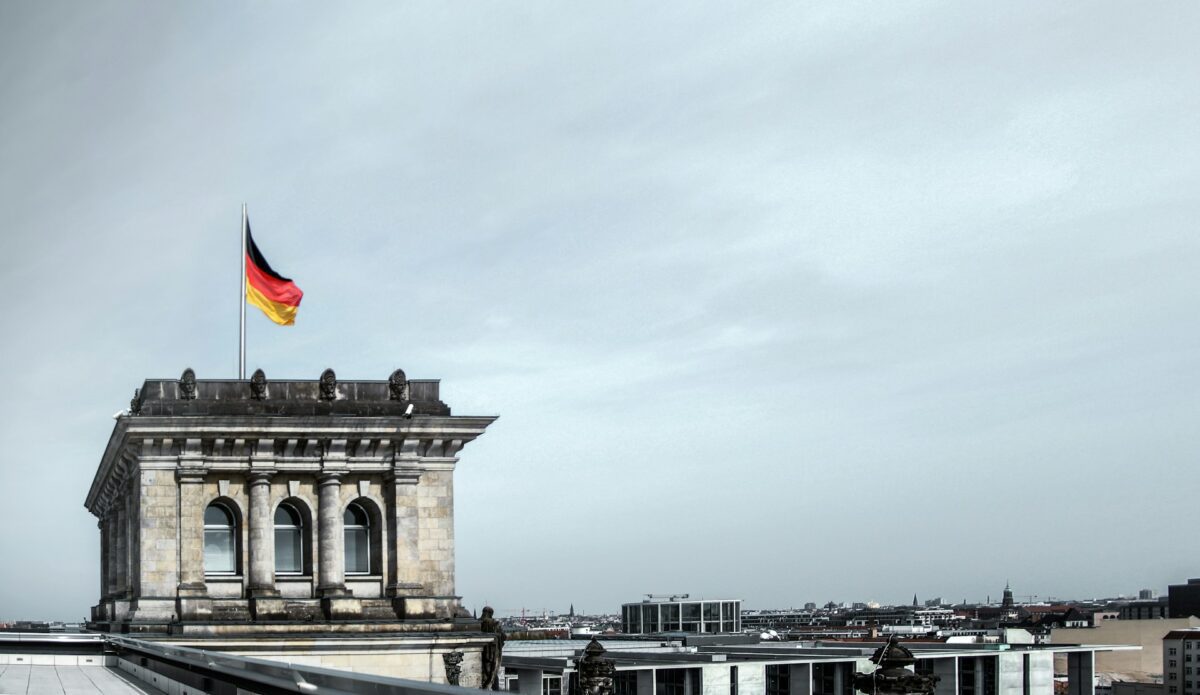
Germany’s 2027 budget plan shows a clear shift in Berlin’s economic thinking. Defense is no longer treated as a separate security file. It is becoming part of Germany’s wider growth, investment and resilience strategy.
The draft budget sets federal spending at €543.3 billion, up 3.6% from the previous year. It also includes €196.5 billion in new borrowing, a major move for a country long associated with fiscal restraint.
The signal is direct. Germany is preparing to spend more because its old economic model is under pressure.
Defense moves into the center of the budget
Defense is the strongest message in the 2027 plan. Germany wants total defense-related spending to reach €144.9 billion in 2027, including special funds and support for Ukraine. That would lift defense spending to 3.1% of GDP.
Core defense spending alone is set to rise to €105.8 billion, compared with €82.7 billion in 2026. Berlin also plans €11.6 billion in Ukraine support for 2027, followed by €8.5 billion per year from 2028 to 2030.
This is not only a military decision. It is an economic one. Russia’s war in Ukraine, pressure from NATO and wider geopolitical risk have forced Germany to rethink what fiscal security means.
Berlin now aims to raise defense spending to 3.7% of GDP by 2030. NATO’s broader long-term target of 5% for defense and security-related spending by 2035 adds more pressure.
Infrastructure becomes part of the growth plan
The budget also puts public investment back at the center of economic policy. Germany plans €118.5 billion in total investment for 2027, with major funding directed through infrastructure and climate programs.
The money is expected to support transport, digital systems and hospitals. These areas matter because Germany’s problems are not only short-term. Weak growth, aging infrastructure and slow digitalization have become structural risks.
Berlin is trying to use public investment to protect jobs, lift productivity and reduce future economic vulnerability. Finance Minister Lars Klingbeil has framed the plan around securing existing jobs, creating new ones and supporting growth.
That is the right political message. The harder question is whether the money can move fast enough to change the economy.
Borrowing creates the next test
The spending plan comes with a heavy debt bill. Germany plans €196.5 billion in new borrowing in 2027, partly through the core budget and partly through special funds for defense and infrastructure.
Those special funds give Berlin more room to spend outside normal debt-brake limits. That solves one problem, but it creates another. Germany can move faster, but it also weakens the image of strict fiscal discipline that shaped its economic identity for decades.
Business groups have already warned that the budget does not offer a clear enough path to economic renewal. Opposition parties and social groups have also raised concerns over savings in welfare, pensions and healthcare.
This is where the politics will become difficult. Germany wants more defense, more infrastructure and more fiscal control at the same time. All three are hard to deliver together.
Germany is changing its economic model
The 2027 budget shows how much Germany has changed. For years, the country relied on export strength, cheap energy, limited military spending and tight public finances. That model no longer fits the moment.
Energy security is more expensive. Defense is more urgent. Industry is weaker. Infrastructure needs more money. The state is being pulled deeper into the economy because private-sector strength alone is no longer enough.
The budget still needs final cabinet approval in July and will face parliamentary debate from September. But the direction is already set.
Germany is preparing to borrow more, invest more and defend more. The economic test is whether that spending rebuilds growth, or simply adds another layer of pressure to Europe’s largest economy.