
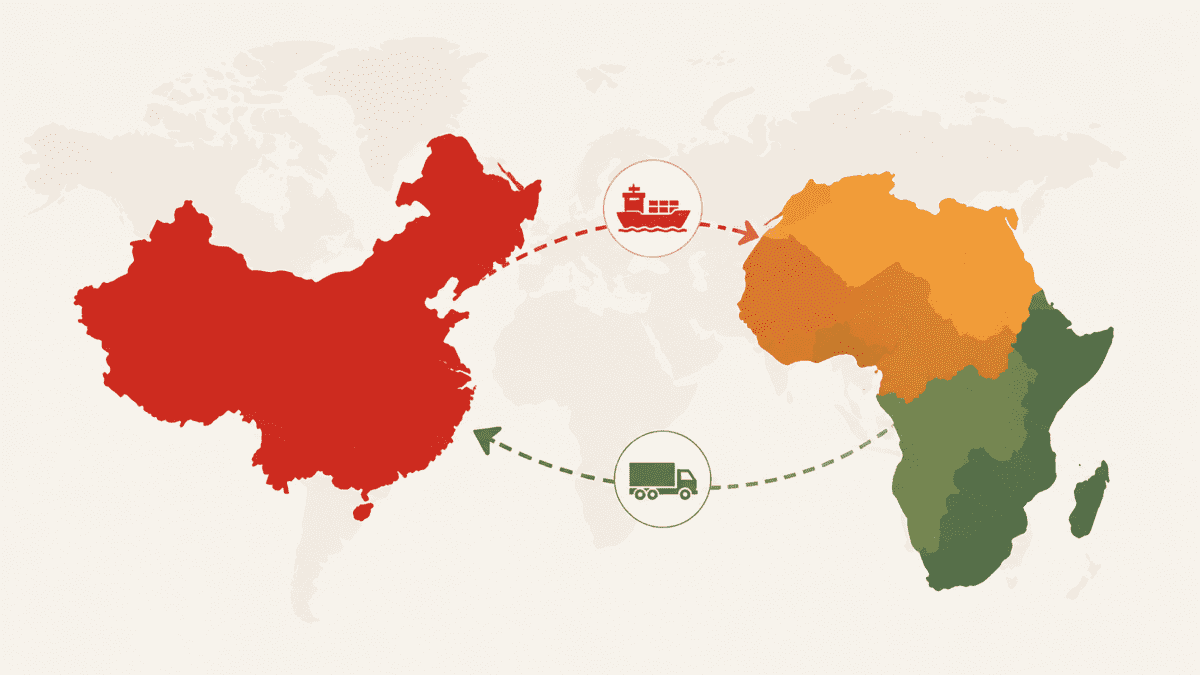
China has removed import tariffs on goods from 53 African countries, giving Beijing a wider economic foothold across the continent at a time when global trade is becoming more political.
China put the measure into effect on May 1, 2026. It covers African countries that maintain diplomatic relations with Beijing. The policy excludes Eswatini, which recognizes Taiwan. China had already granted zero-tariff access to 33 least-developed African countries. The new framework extends that access to 20 additional African economies that did not receive full coverage under the previous system.
The move gives African exporters easier access to the Chinese market. It also gives China another tool to deepen trade, secure supply chains and strengthen its influence across the Global South.
China is already Africa’s largest trading partner. Lower tariffs could help exporters in agriculture, mining, textiles, food processing and selected manufacturing sectors. Countries with stronger production capacity, including South Africa, Nigeria, Egypt, Kenya and Morocco, may be better placed to benefit than smaller economies that still rely heavily on raw commodity exports.
But tariff access alone will not change the structure of China-Africa trade.
Africa’s exports to China remain concentrated in minerals, energy, agricultural products and other commodities. China’s exports to Africa are broader and higher value, including machinery, electronics, vehicles, solar equipment and manufactured goods. That imbalance will not disappear simply because tariffs fall to zero.
For African economies, the real test is whether they can use Chinese market access to sell more processed goods, not only raw materials. That requires better logistics, financing, industrial capacity and compliance with Chinese quality standards. Without those conditions, the policy may increase trade volumes without changing who captures most of the value.
The timing is important. The United States and Europe are using tariffs, sanctions, industrial policy and security rules to reshape supply chains. China is moving in the opposite direction with Africa. It is offering wider market access and presenting itself as a partner for countries that want alternatives to Western trade conditions.
That gives Beijing a diplomatic advantage. China can argue that it is opening its market while Western economies are adding more restrictions. For African governments, that message has political value. For Beijing, the gains are also clear. It strengthens access to raw materials, builds demand for Chinese industrial goods and reinforces China’s role as a long-term economic partner on the continent.
The policy may support some African exporters. Lower tariff costs can improve price competitiveness in the Chinese market. But the larger trade balance still favors China. If African countries continue to export raw materials and import finished goods, the measure could deepen existing patterns rather than transform them.
This is why China’s tariff move should not be read only as support for African development. It is also part of Beijing’s long-term trade strategy.
The economic signal is clear. Trade blocs are shifting. The U.S. and Europe are tightening access in strategic sectors. China is using market access to pull more countries closer to its orbit.
Africa may benefit from the opening. But the scale of that benefit will depend on whether African economies can move beyond raw exports and build higher-value trade with China.