
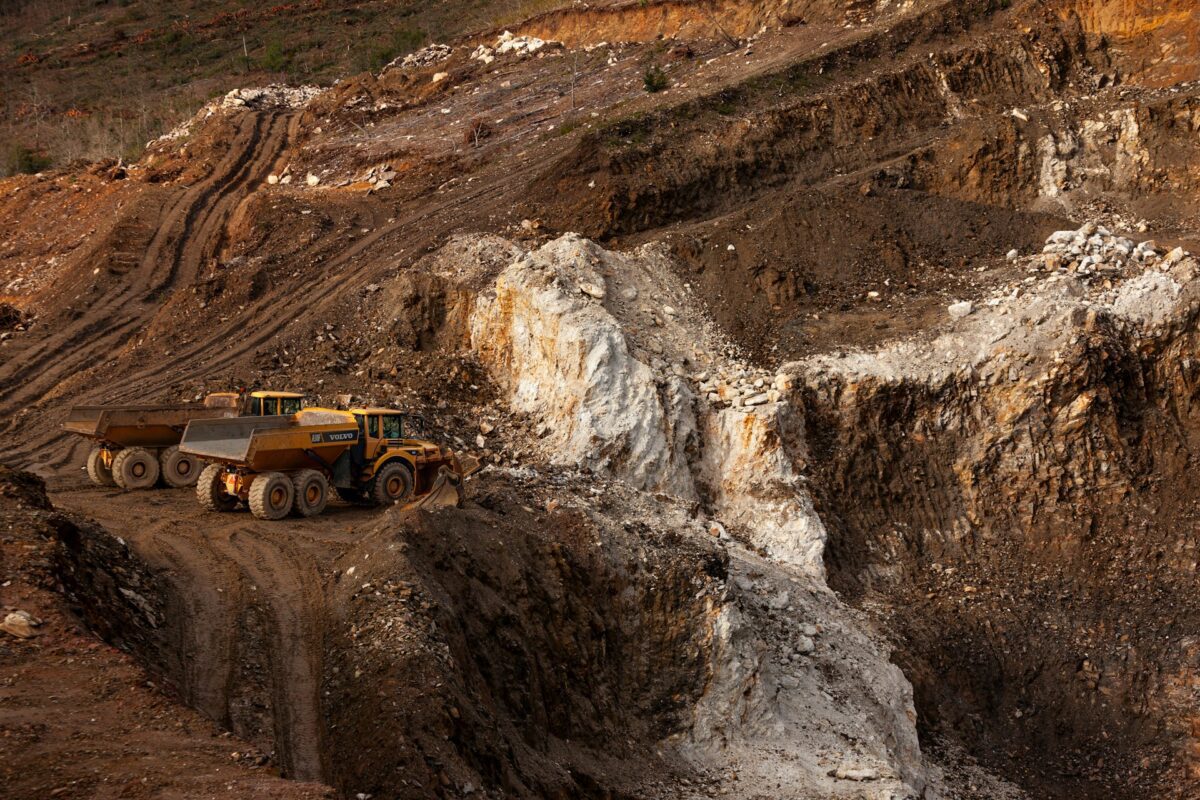
Japan and South Africa have agreed to deepen cooperation on critical mineral supply chains, turning a bilateral diplomatic meeting in Pretoria into a wider signal about industrial security, energy transition and global competition for strategic resources.
Japanese Foreign Minister Toshimitsu Motegi met South African Minister of International Relations and Cooperation Ronald Lamola on May 5 during Motegi’s Africa tour, which included Zambia, Angola, Kenya and South Africa. The official agenda focused on critical minerals, energy cooperation, investment conditions and broader diplomatic coordination.
The agreement does not yet point to a specific mining project or a disclosed investment package. Its economic importance lies elsewhere. Japan is trying to reduce supply chain risk in the materials needed for autos, batteries, electronics, hydrogen technologies and advanced manufacturing. South Africa, meanwhile, wants to use its mineral base to attract investment, expand processing capacity and move further up the value chain.
Critical minerals move from mining issue to supply chain policy
For Japan, critical minerals are no longer just a raw material question. They are part of national economic security.
The country has limited domestic mineral resources and depends heavily on stable overseas supply for industrial production. That makes partnerships with mineral-rich economies more important, especially at a time when governments are trying to reduce exposure to concentrated supply chains.
South Africa offers a strategic fit. Its critical minerals strategy identifies platinum group metals, manganese, iron ore, coal and chrome as high-criticality minerals. It also lists vanadium, rare earth elements, palladium, rhodium, lithium, cobalt, nickel, copper and graphite among other important resources. These materials matter for energy systems, steelmaking, clean technology, automotive production and battery supply chains.
Japan’s latest move also fits a broader pattern. Tokyo has recently intensified mineral and energy cooperation with other partners, including Australia and Vietnam, as geopolitical risk pushes advanced economies to secure alternative supply routes.
South Africa wants investment, not only exports
For Pretoria, the agreement is not simply about selling more raw materials. South Africa has been trying to position itself as a processing and industrial hub rather than only a supplier of unprocessed mineral exports.
That is why the investment part of the meeting matters. Lamola said South Africa wants to diversify trade and investment ties, with Asia as a key region. He also pointed to Japanese business confidence, including Toyota’s R10.4 billion investment pledge linked to new energy vehicles.
This gives the agreement a wider industrial angle. If Japanese companies increase investment in South Africa, the relationship could extend from mineral extraction into processing, logistics, energy infrastructure and manufacturing supply chains.
Energy security remains part of the deal
The talks also covered South Africa’s energy transition. Japan said it would continue supporting South Africa’s decarbonization and energy reform efforts, including arrangements toward yen loans for the energy sector.
That matters because mineral strategy depends on infrastructure. Mining and processing need reliable electricity, rail capacity and port access. South Africa’s long-running energy and logistics constraints have often limited its ability to fully benefit from its resource base.
The real test will be whether the agreement leads to bankable projects. For now, the Pretoria meeting confirms direction rather than delivery. Japan wants resilient supply chains. South Africa wants investment and higher-value mineral activity. Both sides now have a strategic reason to move faster.