
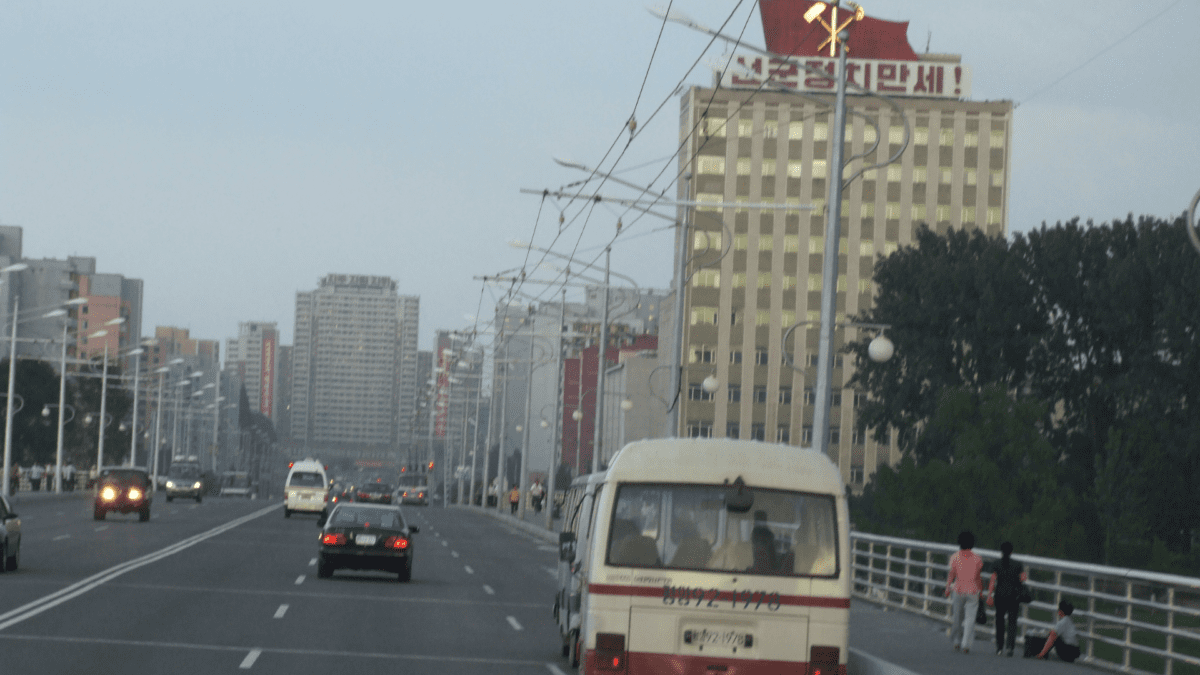
The rise of private cars in Pyongyang is not just a sign of changing transport habits in North Korea. It raises a larger question: is the regime creating a new wealthy class that remains politically dependent on the state?
According to Reuters, which cited verified footage, satellite imagery and visitor accounts, private cars are becoming increasingly visible in the North Korean capital. Pyongyang, long associated with empty roads, state vehicles and military convoys, is now seeing traffic congestion, parking shortages and new services linked to car ownership.
This does not mean North Korea is following China’s post-Cultural Revolution path. But it does point to an important economic shift. The regime appears to be allowing limited forms of private consumption to expand while keeping political control firmly intact.
That makes Pyongyang’s car boom more than an urban story. It suggests that a new wealthy urban layer is becoming visible inside one of the world’s most closed economies, operating only within boundaries approved by the state.
Private cars are becoming a status symbol
Private cars in Pyongyang are increasingly visible, often identified by yellow license plates. Recent regulations have allowed licensed individuals to buy one vehicle per household through state-approved channels.
The exact numbers remain unclear. North Korea does not publish reliable data on vehicle ownership. But expert estimates suggest the number of private cars could soon exceed 20,000.
That figure is small by global standards. For North Korea, it is significant.
Car ownership remains largely concentrated among elites and the entrepreneurial class known as donju, or “money masters.” This group emerged from the market activity that expanded after the collapse of North Korea’s old rationing system. But it is not an independent capitalist class. Its wealth depends on state tolerance, political protection and access to controlled trade networks.
This is the core of the North Korean model now taking shape. Consumption is allowed. Independence is not.
China sits behind the visible shift
The rise in cars also shows North Korea’s economic dependence on China.
United Nations sanctions ban the sale or transfer of transportation vehicles to North Korea. But Chinese customs data point to a sharp increase in vehicle-related exports. Shipments of new passenger car tires from China to North Korea reached nearly 193,000 units in 2025, up 88 percent from pre-pandemic averages. Exports of rear-view mirrors nearly quadrupled, while shipments of lubricating oil and grease rose by more than 150 percent.
Official trade data do not fully capture vehicle imports because car exports to North Korea are restricted under sanctions. But the increase in tires, parts and lubricants points to growing demand around a car economy.
Chinese brands such as Changan, Chery and Geely are reportedly common on Pyongyang’s roads. Some European models have also been seen, suggesting that supply routes around sanctions remain active.
A familiar but limited structure is emerging. North Korea’s political system remains closed. But the upper-end consumer economy in its capital is increasingly supplied through Chinese goods, Chinese logistics and Chinese commercial channels.
The China comparison has limits
The comparison with China is useful, but it should be treated carefully.
After the Cultural Revolution, China preserved Communist Party rule while introducing market incentives, private enterprise and export-led growth. That model produced mass industrialization, foreign investment and a large middle class.
North Korea is not there.
Its economy remains sanctioned, opaque and militarized. The state still restricts information, movement, capital and private enterprise. Research organizations monitoring the country say the regime has also tightened its control over markets since the pandemic, with more inspections, permit checks and pressure on unauthorized goods.
That means Pyongyang’s new cars should not be read as evidence of broad liberalization.
A better reading is this: North Korea is creating controlled consumer privilege. It is not building an open market economy. It is building a managed hierarchy in which wealth can exist, but only as long as it remains politically loyal.
The economic signal matters
North Korea’s economy has shown signs of recovery after the pandemic shock. China-North Korea trade rose 25 percent in 2025 to $2.73 billion, moving close to pre-COVID levels. South Korea’s central bank estimated that North Korea’s economy grew 3.7 percent in 2024, its fastest pace in eight years, supported by stronger ties with Russia and gains in manufacturing, mining and construction.
These figures do not mean ordinary North Koreans are becoming richer. They show that the regime has restored some external trade channels and redirected parts of the economy toward state priorities.
The car boom fits that pattern.
It points not to broad prosperity, but to money at the top. Some households, traders and politically connected business actors now appear to have enough capital to buy vehicles, use private services and reshape parts of Pyongyang’s urban infrastructure.
That matters because visible consumption can create a new social contract. The regime gives selected groups access to cars, housing, restaurants and business opportunities. In return, those groups remain tied to the state.
North Korea is not becoming capitalist, but it is changing
The rise of private cars in Pyongyang does not mean North Korea’s command economy is ending. It does not signal political reform. It does not prove that a broad Chinese-style opening is underway.
But it does reveal a controlled transformation.
North Korea is no longer only a story of isolation, missiles and sanctions. Beneath the political structure, a limited consumer economy is forming around elites, donju entrepreneurs and state-approved channels. Private cars are one of the clearest symbols of that shift.
The real question is not whether North Korea is becoming capitalist.
The sharper question is whether the regime can use limited capitalist spaces without creating social forces it can no longer fully control.
For now, Pyongyang’s traffic jams suggest Kim Jong Un is trying exactly that.