
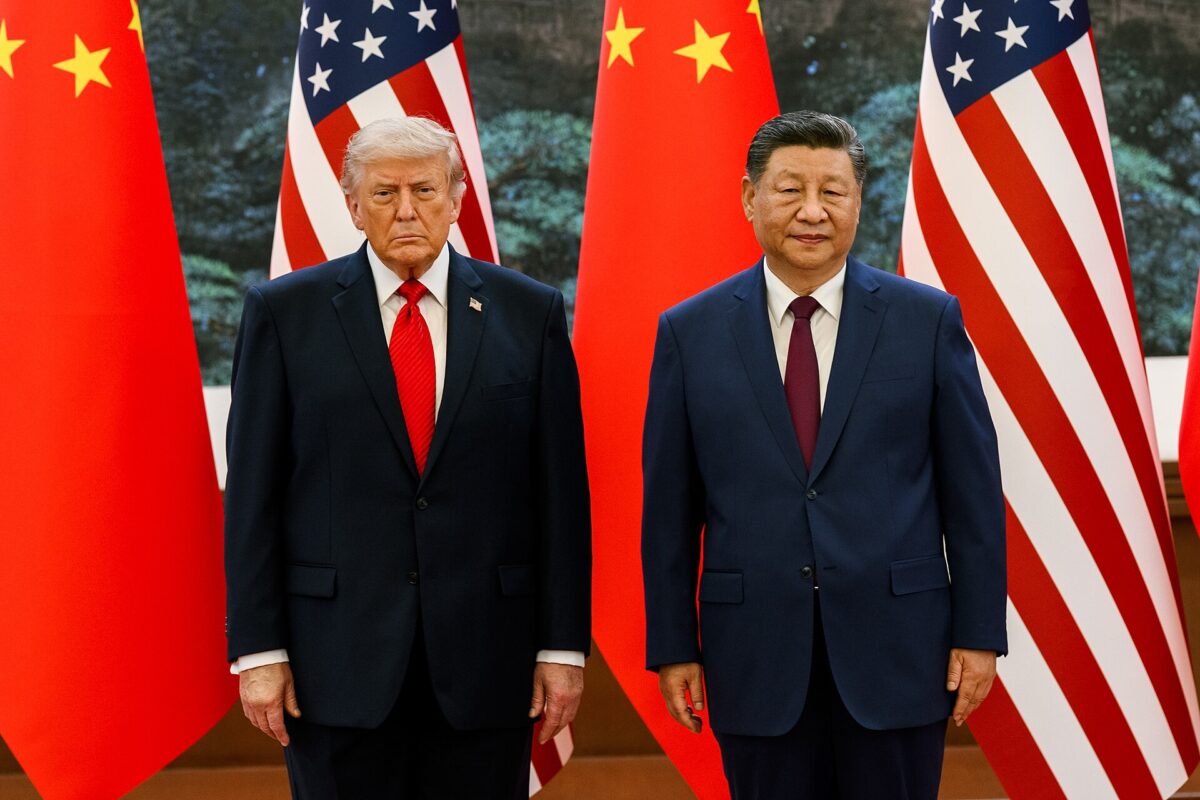
The Trump-Xi meeting in Beijing was supposed to test whether Washington and Beijing could lower pressure on trade, tariffs and energy security. Instead, Taiwan exposed the limit of any economic reset.
Chinese President Xi Jinping warned Donald Trump that the Taiwan issue could push U.S.-China relations into an “extremely dangerous” position if handled incorrectly. He told Trump that Taiwan remains the most important and most sensitive issue between the two powers.
The warning changed the meaning of the summit. The meeting was not only about tariffs, oil, Iran or shipping security. It showed that the world’s two largest economies may seek trade stability while their most dangerous security dispute remains unresolved.
Taiwan moves back to the center
For Beijing, Taiwan is not a secondary diplomatic file. China sees the island as part of its territory and opposes U.S. arms sales to Taipei. Taiwan rejects Beijing’s claim and operates as a self-governed democracy.
Xi’s message was direct. Cross-strait peace and Taiwanese independence cannot coexist. That was not only a warning to Washington. It was also a signal to Taipei, U.S. allies and global markets.
This is why the summit matters beyond diplomacy. Economic cooperation between China and the United States still depends on political limits that neither side has solved.
Hormuz is an oil risk. Taiwan is a technology risk.
Before the meeting, attention was focused on tariffs, Chinese purchases of U.S. goods, energy flows and the Strait of Hormuz. Those issues still matter. A disruption in Hormuz can raise oil prices, freight costs and inflation pressure.
A crisis in the Taiwan Strait would hit semiconductors, electronics, artificial intelligence infrastructure and defense supply chains. It would not be limited to Asia. It would move quickly through global manufacturing, cloud computing, consumer electronics and financial markets.
That makes Taiwan one of the biggest economic risks in the U.S.-China relationship. It is not only a question of sovereignty. It is a question of how much pressure the global economy can absorb if the technology supply chain is disrupted.
Trade relief does not remove the Taiwan risk
Trump entered the meeting looking for economic openings. His agenda included trade relief, energy cooperation, Chinese purchases of American goods and possible coordination over shipping disruptions linked to Iran and the Strait of Hormuz.
Xi had a different priority. China wants more stable economic relations with Washington, but not at the cost of weakening its position on Taiwan.
That creates the central problem. The U.S. and China may be able to negotiate over tariffs, energy exports, aircraft purchases or agricultural trade. But Taiwan cannot be priced like a trade concession.
This limits any reset before it begins. Even if the two sides reach partial agreements, companies and investors still face the larger risk of a cross-strait crisis.
The economic risk is now political
The message from Beijing was clear. U.S.-China trade can improve, but only inside a political framework China considers acceptable.
For Washington, that creates a difficult balance. The U.S. wants to stabilize trade and protect Taiwan without triggering a direct confrontation with China. For Beijing, Taiwan remains the issue that can override the economic relationship.
The biggest danger is not a failed trade negotiation. It is a security crisis that turns supply chains, technology markets and global inflation into collateral damage.
For the global economy, Taiwan is no longer just a geopolitical issue. It is a market risk, a semiconductor risk and a test of whether Washington and Beijing can manage rivalry without turning it into direct confrontation.