
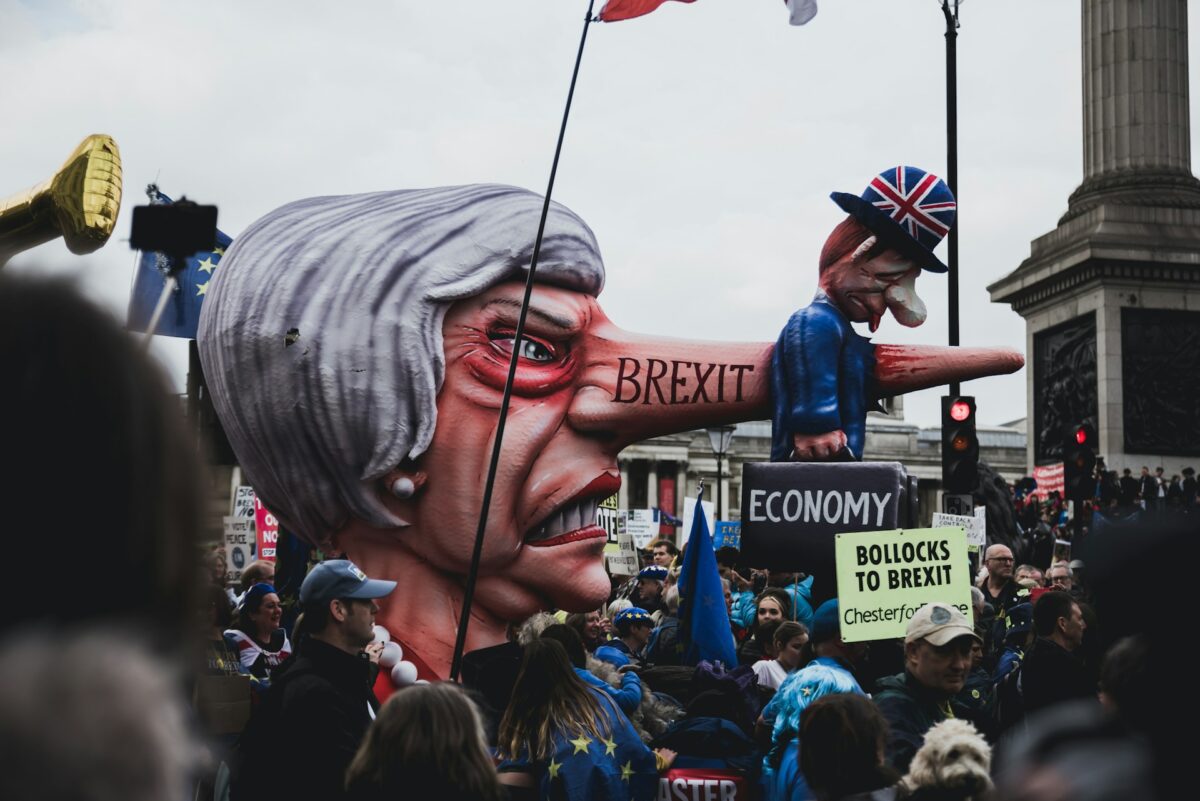
Wes Streeting has pushed Britain’s European debate back into the political spotlight. The former health secretary called Brexit a “catastrophic mistake.” He also argued that the UK needs a “new special relationship” with the European Union. Streeting went further by saying Britain’s future lies with Europe and, eventually, back inside the EU. As he confirmed plans to stand in a future Labour leadership contest, the comments quickly became part of a larger debate about Britain’s post-Brexit direction.
Nearly a decade after the referendum, the argument is no longer just about sovereignty or identity. It is increasingly about economics. Brexit promised Britain greater control over laws, borders and trade policy. But while the UK left the EU’s political system, it did not escape Europe’s economic reality. Britain’s closest and largest market is still across the Channel. Its trade routes, supply chains and financial systems remain closely tied to Europe.
The economic consequences are becoming harder to ignore. The Office for Budget Responsibility expects UK imports and exports to be around 15 percent lower in the long term than they would have been inside the EU. It also estimates that weaker trade intensity could reduce the UK’s long-run productivity by about 4 percent. Lower productivity eventually affects wages, investment, public services and defence spending.
Britain’s relationship with the United States remains important, especially on defence and intelligence. NATO cooperation and security ties still shape British foreign policy. But the American alliance has never replaced the economic depth Britain once had through the EU single market. Washington can provide strategic partnership. It cannot remove customs friction, rebuild European supply chains or recreate smoother trade conditions with Europe.
That is why Britain’s traditional Atlantic outlook appears increasingly limited as an economic strategy. The UK can maintain strong ties with the US while recognising that geography still shapes trade and investment. Regional markets matter. Regulatory alignment also matters for exporters and businesses operating across borders.
Streeting’s comments stand out because they openly acknowledge something many British politicians avoid saying directly. A limited “reset” with Brussels may not be enough. Prime Minister Keir Starmer supports closer cooperation with the EU on trade and security. However, he has ruled out rejoining the bloc, the single market or the customs union. Politically, that may be the safest position for Labour. Economically, it leaves Britain in an awkward middle ground.
Britain remains outside the structures that provide the full benefits of integration. At the same time, it is still heavily affected by European rules, markets and political developments. That tension is becoming more obvious as the global economy fragments and geopolitical risks rise.
Britain still needs close cooperation with Europe on defence, migration, energy, customs rules, food standards and industrial policy. Russia’s war in Ukraine has made European security coordination more urgent. Energy shocks have also highlighted the importance of regional resilience. Political uncertainty in the United States has pushed European governments to think more seriously about long-term defence capacity. Britain, as both a major military power and a European country, cannot stand apart from those discussions.
The economic pressures point in the same direction. Britain’s services sector depends on market access. Manufacturers need predictable regulations and smoother trade conditions. Food exporters want fewer border checks. Investors look for stability and regulatory clarity. A country trying to improve productivity cannot maintain endless friction with its nearest major market.
None of this means rejoining the EU is politically realistic in the near future. Brexit remains divisive. Any move toward membership would face resistance from parts of the electorate, sections of the press and political figures who still view closer EU alignment as a loss of sovereignty. Even so, the practical direction is becoming clearer.
Britain is likely to need a deeper trade and security relationship with the EU over time. That could mean reducing trade barriers, easing checks on agricultural goods and improving mobility arrangements for workers and young people. It could also mean aligning regulations where it supports growth and rebuilding cooperation in defence and industrial policy.
Streeting’s intervention matters because it reflects a growing recognition that Britain’s post-Brexit settlement still feels incomplete. The country has not found a convincing replacement for the economic advantages it gave up. New global trade deals have not transformed growth. Distance from Brussels has also failed to produce the stronger industrial economy many Brexit supporters promised.
At its core, the problem is simple. Britain tried to turn political separation into economic advantage. So far, that strategy has struggled to deliver the results supporters expected.
A closer relationship with the EU would not solve every structural weakness in the British economy. It would not suddenly reverse years of weak investment, low productivity growth or pressure on public services. However, it could remove one major drag on growth. It could also give Britain a clearer role inside a rapidly changing European landscape.
The real choice is not between Europe and America. Britain can maintain its alliance with the United States while rebuilding stronger ties with Europe. The mistake has been treating the Atlantic relationship as a replacement for continental integration rather than a complement to it.
Streeting’s argument cuts through that contradiction. Brexit may have changed Britain’s legal relationship with Europe, but it did not change the country’s economic geography.