
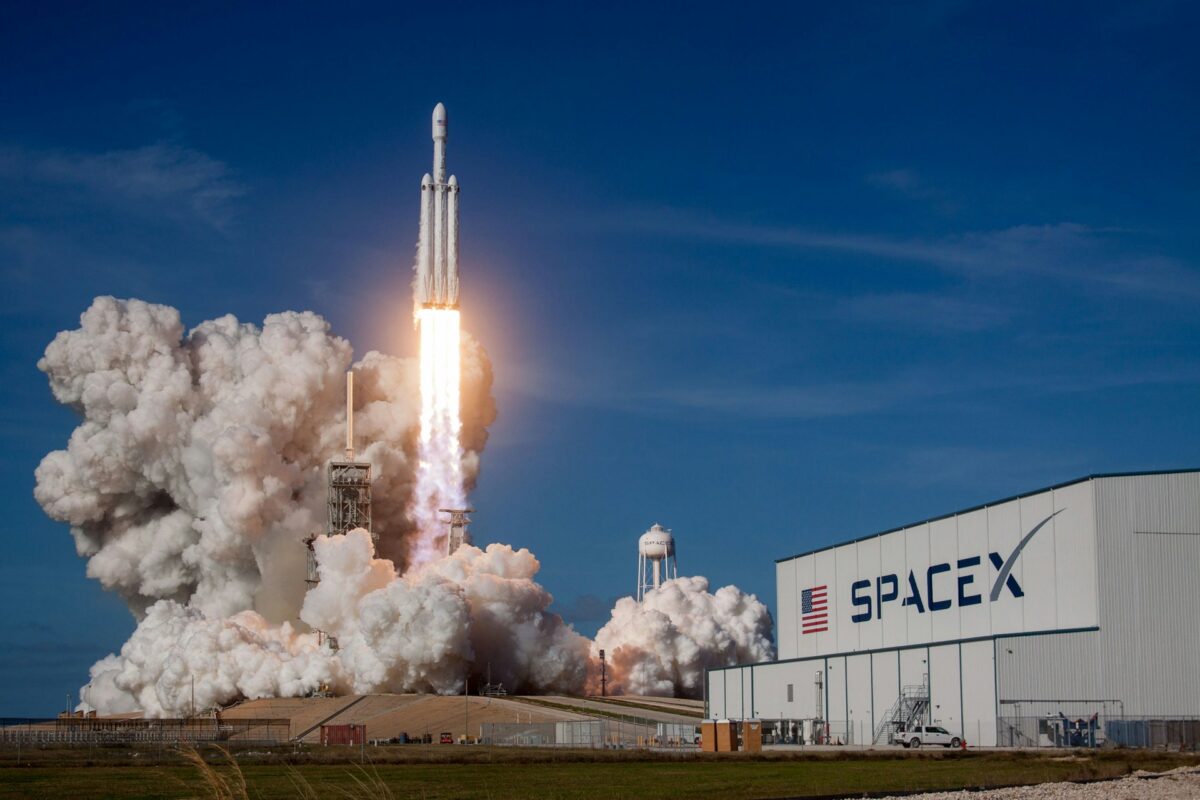
SpaceX’s reported plan to list on Nasdaq as early as June 12 could make the commercial space industry one of the biggest capital markets stories of the year.
According to sources familiar with the matter, the Elon Musk-led company is targeting a valuation of roughly $1.75 trillion. It could also raise about $75 billion in its initial public offering. If completed near those figures, the listing would rank among the largest IPOs ever. SpaceX has not publicly confirmed the final timing or terms.
The scale matters. This would not be a typical technology listing. SpaceX would enter public markets with a valuation usually reserved for the world’s largest technology platforms. Investors would be forced to place a market value on an industry often driven more by ambition than financial discipline.
SpaceX is not only a rocket company. It sits at the center of reusable launch systems, satellite internet, government space contracts and orbital infrastructure. Starlink has turned satellite connectivity into a global business. Meanwhile, SpaceX’s launch operations have reshaped the economics of reaching orbit.
The company’s role in NASA missions and defense-linked space services strengthens its position. It blends private technology, national security and infrastructure. That mix makes the possible IPO important beyond Elon Musk himself.
A public listing would test whether investors see the space economy as a durable economic platform. It would also test whether the sector is simply another high-growth story priced far ahead of its financial base.
The reported deal also comes at a time when markets are showing renewed appetite for large technology listings. SpaceX would be a much larger test of that demand. Unlike many growth companies, it combines a consumer-facing satellite internet business with a strategic launch operation tied to governments, companies and defense needs.
There is also a capital-spending question. Space is expensive. Rockets, satellites, launch facilities, data systems and orbital infrastructure require massive long-term investment. A public listing could provide SpaceX with a broader funding base for projects that private markets may not support indefinitely.
Public markets would also bring greater scrutiny. Investors would examine revenue, margins, debt levels, government exposure and the economics of Starlink more closely. That scrutiny could be healthy for the broader sector.
For years, the commercial space industry has traded partly on vision. Mars missions, global connectivity and reusable rockets have driven excitement. Private space infrastructure has also fueled investor optimism. Public markets, however, would demand clearer financial results. Investors would need to decide whether SpaceX’s lead in launch and satellite services justifies a valuation close to the world’s largest listed companies.
The human dimension remains part of the story, but it should not overshadow the market question. SpaceX has changed how governments, companies and consumers think about access to space. A successful IPO would suggest that space infrastructure is evolving from a frontier narrative into an investable asset class.
For now, the deal remains reported rather than finalized. Still, if SpaceX lists in June near the figures being discussed, the IPO could mark a turning point for the space economy. It would show whether Wall Street is ready to treat orbit not as a distant ambition, but as a major market.