
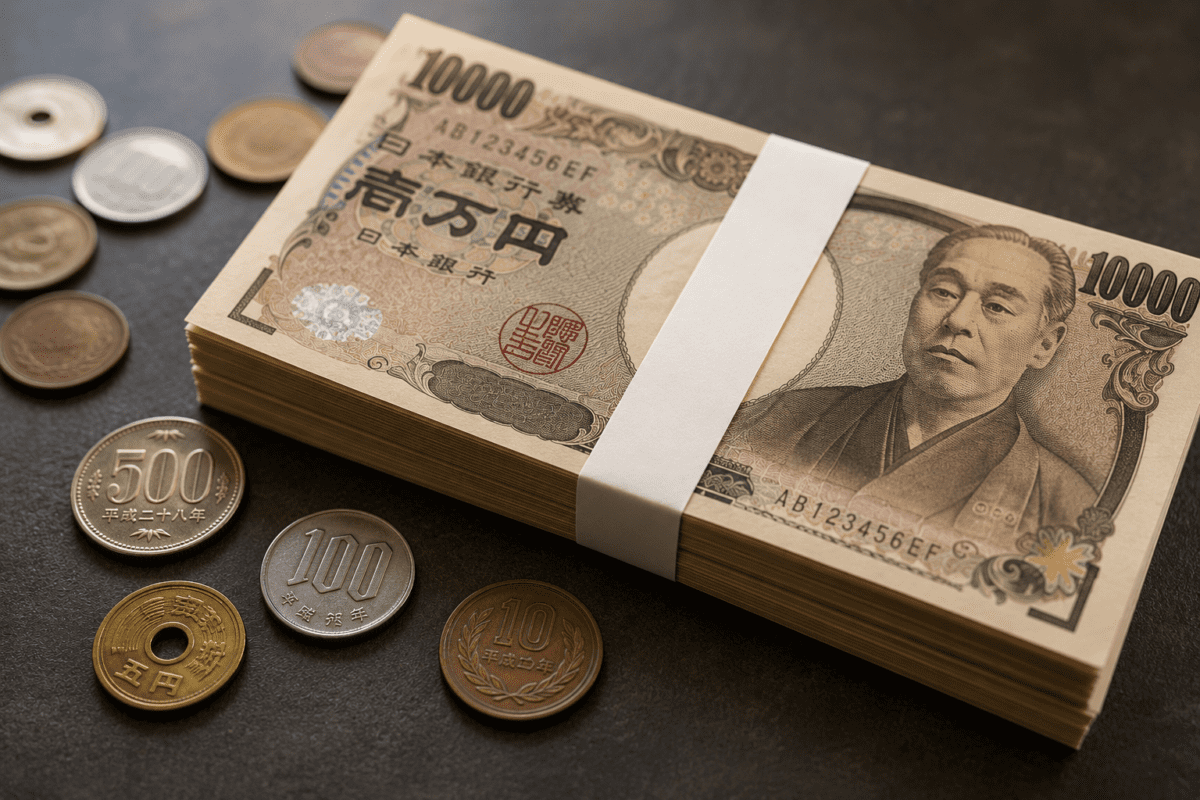
Tokyo is spending heavily to slow the yen’s fall, but intervention alone cannot erase the pressure coming from U.S. rates, energy costs and a stronger dollar.
Japan is trying to slow a dangerous slide in the yen, and the move is sending a wider signal through global markets.
Japanese authorities are believed to have stepped into the foreign exchange market again in recent weeks, buying yen after the currency came under renewed pressure near levels that previously triggered official action. Market estimates based on central bank money-market data suggest Tokyo may have spent tens of billions of dollars defending the currency.
The operation matters beyond Japan. If one of the world’s largest reserve holders must spend heavily to stabilize its currency, smaller economies with weaker buffers face a harsher version of the same problem.
Tokyo is defending the yen, not reversing the trend
Japan’s currency policy is controlled by the Ministry of Finance, while the Bank of Japan executes intervention as its agent. That distinction matters. The BOJ is not independently selling dollars to rescue the yen; it acts under government direction when authorities decide that exchange-rate moves have become excessive.
Official Japanese data show the country still has large reserves. Japan’s reserve assets stood at about $1.37 trillion at the end of March 2026, according to the Ministry of Finance. That gives Tokyo room to act, but it does not guarantee success if market pressure keeps moving in the opposite direction.
Currency intervention can slow a fall. It can punish speculators. It can buy time. But it rarely changes the structural forces behind a currency move unless interest-rate expectations, energy prices or capital flows also shift.
The pressure comes from rates and energy
The yen’s weakness is not only a trading story. It is tied to a basic macroeconomic imbalance.
U.S. interest rates remain far above Japan’s. That makes dollar assets more attractive and keeps pressure on the yen. At the same time, higher energy prices hurt Japan because the country depends heavily on imported fuel. When oil and gas prices rise, import costs increase and the currency faces another drag.
This creates a difficult loop. A weaker yen makes imported energy more expensive. Higher import costs feed inflation pressure. But if the BOJ raises rates too aggressively to support the currency, it risks damaging domestic demand and unsettling Japan’s government bond market.
Reserves buy time, not a new exchange rate
Japan is not running out of reserves. The more accurate point is that it is using part of its financial firepower to manage a currency problem that monetary policy has not fully solved.
That distinction is important. The situation is serious, but it is not a collapse.
Japan has deep capital markets, large external assets and one of the largest official reserve positions in the world. It can defend the yen more credibly than most countries. Yet the fact that it may need repeated intervention shows how strong the dollar environment has become.
For global markets, the message is clear: reserve strength can delay currency stress, but it cannot remove it when rate differentials and energy shocks remain in place.
Emerging markets face the harder test
The risk is sharper outside Japan.
Many emerging markets do not have Japan’s reserve depth, investor base or policy credibility. A similar currency shock can move faster through their economies. Import prices rise. Fuel costs climb. Central banks face pressure to raise rates. Governments must decide whether to spend reserves, tighten policy or allow their currencies to weaken.
Defending a currency can drain reserves. Raising rates can slow growth. Letting the currency fall can worsen inflation and increase the local-currency burden of dollar debt.
That is why Japan’s yen defense is more than a local story. It is a warning about the cost of a strong dollar cycle.
The dollar remains the center of the shock
The broader market pressure is coming from the same source: investors still see the dollar as the strongest place to hold capital when inflation risks, geopolitical shocks and higher U.S. yields dominate the outlook.
That gives the United States a financial advantage, but it exports pressure elsewhere. Japan feels it through the yen. Energy-importing economies feel it through fuel prices. Emerging markets feel it through capital outflows and debt costs.
Tokyo can keep intervening if the yen falls too quickly. But unless the gap between U.S. and Japanese rates narrows, or energy prices ease, the market will keep testing how much Japan is willing to spend.
For now, Japan is not showing weakness because it lacks reserves. It is showing that even large reserves have limits when the dollar is strong and global capital is moving in one direction.
The larger question is no longer only whether Tokyo can defend the yen. It is how many other economies will be forced into the same fight.