
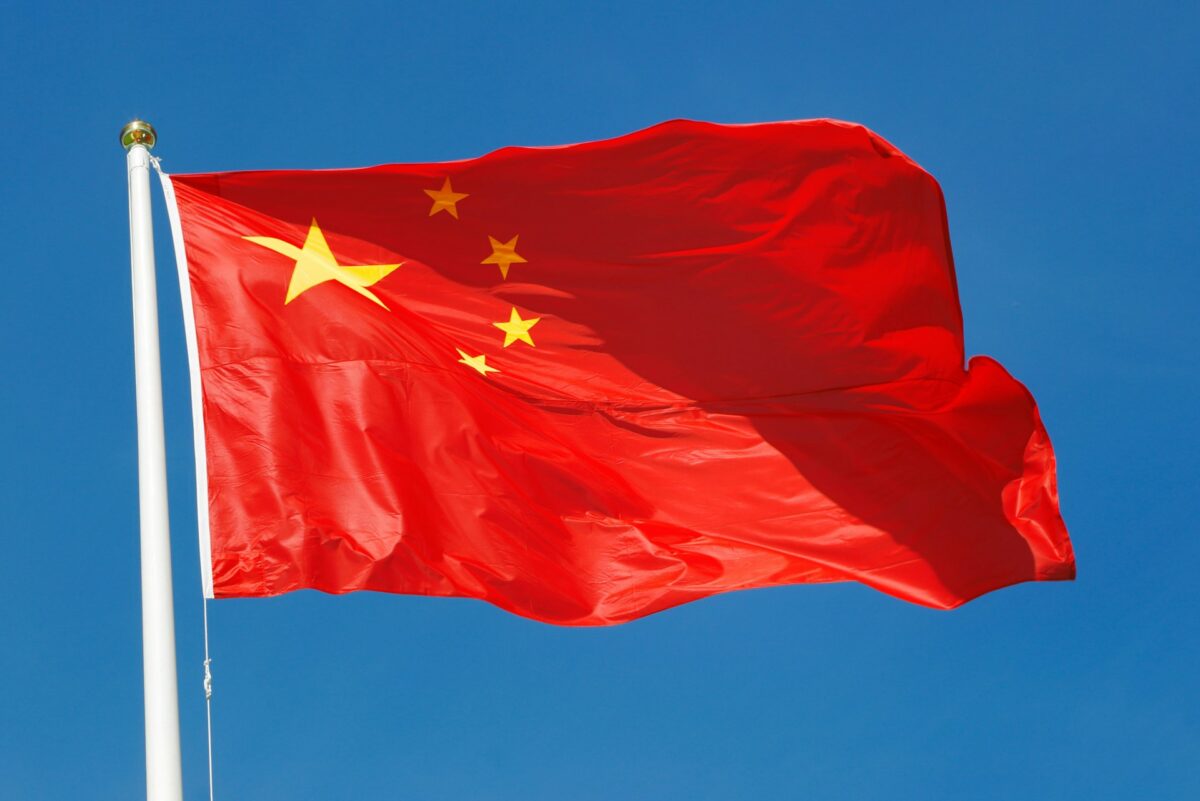
China is deepening its relationship with Serbia at a moment when President Aleksandar Vucic is facing growing pressure at home.
The latest meeting between Chinese President Xi Jinping and Vucic was presented as another step in the two countries’ “shared future” partnership. More than 20 cooperation agreements were signed across politics, trade, technology, education, security and culture.
On paper, this looks like another diplomatic upgrade. In practice, it says much more about China’s strategy in the Balkans, Serbia’s position outside the European Union and Vucic’s need for strong external partners while domestic trust weakens.
Serbia offers China a gateway near the EU
Serbia matters to Beijing because it sits close to the European Union without being bound by the full weight of EU rules.
Belgrade is still formally on the path toward EU membership, but the process remains slow and politically difficult. Rule of law, democratic standards, media freedom and the unresolved Kosovo issue continue to block real progress. This gives Serbia an unusual position. It is economically tied to Europe, but politically more flexible than EU member states.
Serbia gives Beijing access to a country connected to European markets, transport routes and industrial supply chains, while still offering fewer regulatory and political constraints than the EU itself.
This is why China’s interest in Serbia should not be read only through trade numbers. Serbia is a logistics point, an industrial base and a political opening on Europe’s southeastern edge.
Vucic’s domestic position is no longer secure
The timing also matters because Vucic is facing one of the most serious waves of public anger in years.
Student-led protests have grown into a wider challenge to the Serbian government. The movement gained force after the Novi Sad railway station disaster, which became a symbol of alleged corruption, weak oversight and the close relationship between public contracts, political power and major infrastructure projects.
That creates a problem for Vucic. His political model has long depended on control, stability and the image that only he can balance Serbia between the EU, Russia, China and the West. The protests weaken that image. They show that a significant part of Serbian society no longer accepts the government’s version of stability.
Chinese investment in Serbia depends heavily on state-to-state deals, fast approvals and centralized decision-making. If Vucic’s authority weakens, the political certainty that made Serbia attractive to Beijing becomes less reliable.
China sees value in Serbia’s strategic ambiguity
Serbia is not simply another small Balkan economy. It is one of the few European countries that maintains close relations with Brussels, Moscow and Beijing at the same time.
Serbia wants EU investment and access to European markets. It also keeps deep political and energy ties with Russia. At the same time, it welcomes Chinese capital, infrastructure projects and security cooperation.
For Beijing, this makes Serbia a useful partner. It is close enough to Europe to matter, but distant enough from Brussels to move differently.
In this sense, Serbia functions as a buffer zone. It is not inside the EU system, but it is close enough to influence the region around it. China can use that space to build long-term economic and political leverage.
Infrastructure is the real instrument
Railways, highways, steel plants, copper mines, energy projects and logistics corridors are not just economic assets. They create long-term relationships between states, contractors, lenders and political elites.
In Serbia, Chinese companies have become involved in major transport, industrial and energy projects. In Montenegro, Chinese-backed highway financing showed how Beijing can use infrastructure to expand its presence across the Western Balkans.
The logic is direct. Infrastructure turns influence into something physical. Once a country’s roads, railways, factories or energy assets are tied to Chinese financing and construction, the relationship becomes harder to unwind.
That is why Serbia is so important. It connects the Western Balkans to Central Europe and sits on routes that matter for trade, energy and security.
The EU still dominates, but China moves faster
The European Union remains Serbia’s most important economic partner. That has not changed.
But China competes differently. Brussels offers accession, rules, reforms and long procedures. Beijing offers capital, construction, political support and fewer public conditions.
Vucic can present Chinese investment as proof that Serbia has options beyond the EU. China can present Serbia as proof that its Belt and Road strategy still has influence in Europe. Both sides gain from the message.
But the risks are increasing. Public anger in Serbia is now focused on corruption, accountability and the quality of major state-backed projects. That puts Chinese-linked infrastructure inside a more sensitive political debate.
Serbia is becoming a test case
China’s Serbia strategy is not just about trade. It is about influence near the EU without entering the EU system.
Serbia gives Beijing a foothold in the Western Balkans, a partner with strong state control, and a government willing to balance between rival powers. But Vucic’s domestic troubles make the equation less stable than before.
If the protests continue to grow, Chinese projects may face more scrutiny. If Vucic survives the pressure, Beijing may deepen its relationship with a leader who still needs outside support.
For the EU, the challenge is clear. It remains the region’s largest economic force, but China is active in the spaces where Brussels moves slowly. In the Balkans, speed, money and political flexibility can still carry weight.