
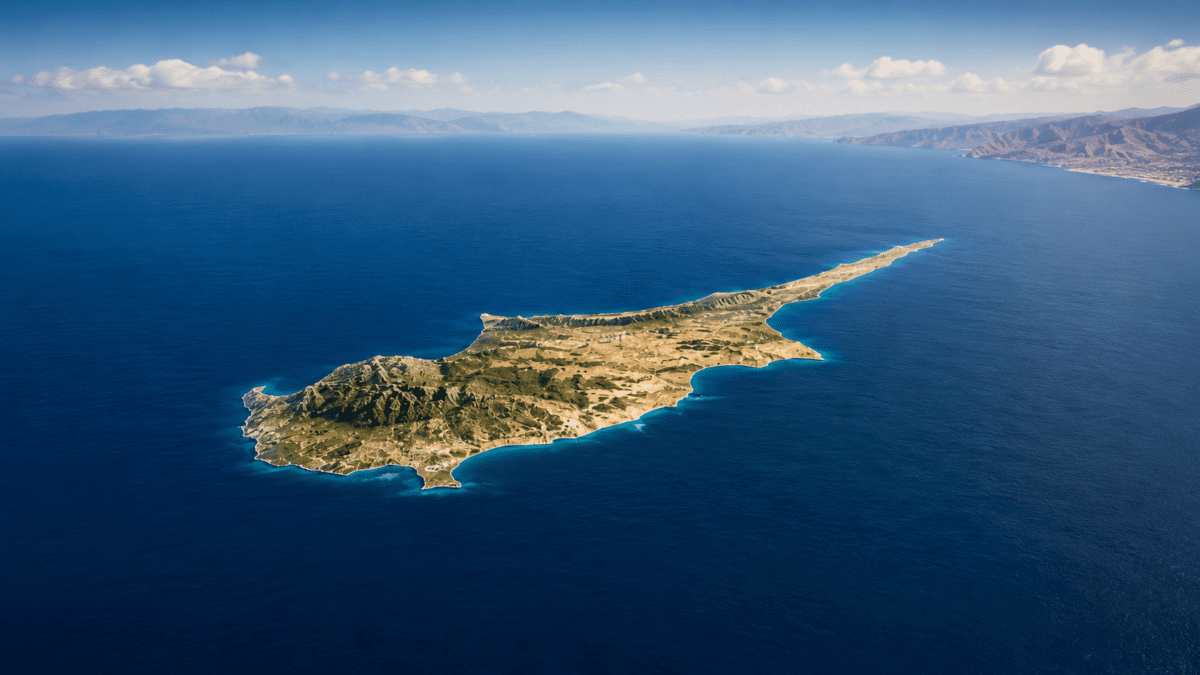
Cyprus is no longer just an island between Europe and the Middle East. It is becoming one of the most important strategic points in the Eastern Mediterranean.
Geography has always made that possible. The island sits south of Turkey and close to Syria, Lebanon, Israel and Egypt. However, its current importance does not come from geography alone. Energy, military access, surveillance capacity and regional security networks now give Cyprus a much larger role.
The Republic of Cyprus joined the European Union in 2004. As a result, the southern part of the island holds a direct place inside Europe’s political system while remaining physically close to the Middle East. For the EU, this matters. Europe still needs alternative energy routes and more secure supply chains after years of disruption in global energy markets.
Eastern Mediterranean gas is part of that calculation. Cyprus, Israel and Egypt sit near offshore gas fields that could support Europe’s wider diversification strategy. The island will not become a major global energy power on its own. Nevertheless, it can serve as a useful platform for moving, processing and securing regional energy flows.
The emerging Cyprus-Egypt energy route shows this clearly. Plans to send Cypriot gas to Egypt’s LNG facilities, and then onward to international markets, give the island a larger economic role. Egypt strengthens its position as a processing and export hub. Meanwhile, Cyprus gains weight as a political and geographic gateway between the Eastern Mediterranean and Europe.
That is why Cyprus should be read as more than an energy story. It is also a security story.
The island hosts Britain’s sovereign base areas at Akrotiri and Dhekelia. These bases give the UK long-term military reach into the Eastern Mediterranean, the Middle East and North Africa. In periods of regional conflict, that access becomes more valuable. Cyprus can serve as a logistical platform, an intelligence point and a forward operating position.
In that sense, the island functions as a kind of watchtower. From Cyprus, military and intelligence networks can follow key lines across Israel, Lebanon, Syria, Egypt, Anatolia and the wider Eastern Mediterranean. This does not mean one actor controls the island. Rather, several strategic networks now overlap there.
The northern part of Cyprus remains central to this equation. Turkey is the only country that recognizes the Turkish Republic of Northern Cyprus. For Ankara, however, the TRNC is not merely a symbolic issue. It is a political, military and legal anchor in the Eastern Mediterranean.
Turkey sees its role as a guarantor power, its military presence on the island and its support for the TRNC as parts of the same strategic line. Ankara argues that regional actors cannot exclude Turkish Cypriots from the island’s political future, energy resources or security architecture.
This connects directly with Turkey’s Blue Homeland doctrine. For Ankara, the Eastern Mediterranean is not a distant maritime zone. It is part of Turkey’s national security perimeter. Therefore, energy exploration, maritime jurisdiction, naval access and the future of Cyprus all belong to the same strategic picture.
That is why Turkey closely watches the growing cooperation between Greece, Israel, Egypt, the Republic of Cyprus, the UK and the United States. From Ankara’s perspective, this network could create a security and energy order in the Eastern Mediterranean that leaves Turkey and the TRNC outside the main framework.
The Republic of Cyprus is moving deeper into Europe’s energy and security system. At the same time, the TRNC gives Turkey a counterweight on the island. This split makes Cyprus both a bridge and a fault line.
The Turkish Straits remain strategically important. Yet the Eastern Mediterranean is gaining a second layer of importance. Trade routes, energy flows, naval access and surveillance capacity are shifting more attention toward Cyprus.
Different actors see the island through different strategic needs. Israel values its proximity and security depth. Egypt sees support for its energy hub ambitions. Europe views Cyprus as a route into the Eastern Mediterranean. Britain and the United States benefit from military access. Turkey, meanwhile, sees the island as a line it cannot ignore.
The old question was whether Cyprus belonged more to Europe or Asia. That question now looks too narrow. The real issue is whether Cyprus will become a stable bridge between regions or a forward line in a harder geopolitical contest.