
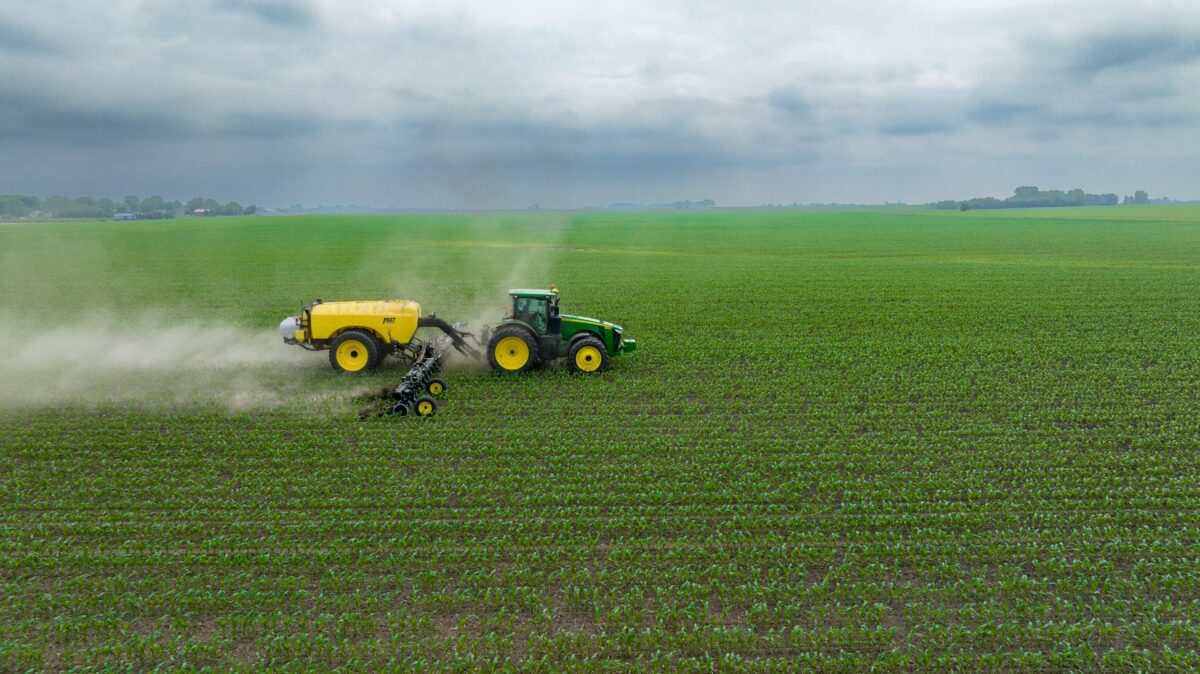
The economic impact of the Middle East conflict is no longer limited to oil. Disruptions around the Strait of Hormuz are now putting pressure on one of the most important inputs in the global food system: fertilizer.
This is not a crisis that will show up immediately on supermarket shelves. Its effect is slower. If farmers cannot secure fertilizer on time, or if they use less because of rising costs, the consequences will appear in planting decisions in 2026 and harvest results in 2027.
Hormuz is now a food security corridor
The Strait of Hormuz has long been viewed as one of the world’s most sensitive energy chokepoints. The current crisis shows that it is also a critical corridor for food security.
According to FAO, Hormuz normally carries about 20 million barrels of oil per day, roughly one-fifth of global LNG trade and up to 30 percent of international fertilizer trade. That means any disruption in the strait can affect energy prices, shipping costs, fertilizer availability and food production at the same time.
Kpler data shows the scale of the pressure. As of April 15, 44 fertilizer vessels were loaded or loading in the Gulf. Their total cargo stood at 2,091 kt. That included 1,024 kt of urea, 608 kt of sulphur and 404 kt of phosphate and complex fertilizers.
The figures matter because they reveal how narrow the global fertilizer chain has become. Fertilizer is not just another commodity. It is a basic condition for crop yields.
The problem goes beyond urea
Reading the crisis only through urea prices would miss the wider risk.
Urea is essential for nitrogen-hungry crops such as corn and wheat. But the Gulf is also important for sulphur trade. Sulphur is used to produce sulphuric acid, which is needed in phosphate fertilizer production.
If that flow is interrupted, the impact can spread beyond countries directly buying fertilizer from the Gulf. Producers in other regions may also face cost and supply pressure.
This is where the agricultural effect of war differs from the oil shock. Higher oil prices create immediate cost pressure. Fertilizer disruption creates a yield risk.
Price pressure reaches the farm
In the United States, urea prices reportedly rose by 55 percent after the Hormuz disruption, while another nitrogen fertilizer product increased by 33 percent. The rise was sharp enough to trigger scrutiny from the US Federal Trade Commission.
Corn is one of the crops most exposed to nitrogen fertilizer costs. Kpler’s farmer survey suggests that 63 percent of US corn growers had already bought at least 80 percent of their planned nitrogen fertilizer for 2026. That reduces the risk of an immediate collapse in planting decisions.
But the same survey points to a deeper concern. Around 50 percent of growers said they did not expect to apply the full amount of fertilizer they had planned. Of that group, 96 percent cited price or availability problems.
Brazil shows the global vulnerability
Brazil is one of the clearest examples of how global this risk has become.
The country is one of the world’s largest agricultural producers, but it imports about 85 percent of its fertilizer needs. In 2025, Brazil imported a record 45.5 million tonnes of fertilizer.
Its dependence is even more striking in urea. Brazil imported all of its urea needs in 2025, and about 41 percent of those shipments passed through Hormuz.
That makes a military risk in the Middle East a direct concern for farmers in South America. In Brazil, urea prices rose by about 35 percent in two weeks. Farmers began shifting toward cheaper alternatives. Urea imports fell 33 percent in the first two months, while ammonium sulphate imports rose 19 percent.
Such shifts can reduce short-term costs. But they also raise questions about crop nutrition, soil balance and yield quality.
El Niño adds another layer of risk
The fertilizer shock is not happening in isolation. Climate risk is also returning.
NOAA’s latest assessment puts the probability of El Niño emerging between May and July 2026 at 82 percent. The chance of it lasting into the 2026-27 winter is estimated at 96 percent.
That matters for Australian wheat, South American crops and rainfall patterns across Asia. El Niño alone does not create a global food crisis. But when fertilizer is expensive, energy costs are high and shipping routes are fragile, climate risk can produce sharper price movements.
The hidden cost of war may appear in food
The Middle East conflict may look regional in military terms. Economically, its effects are spreading through farms, feed markets, food processors and consumer prices.
This is no longer just about expensive oil. When fertilizer ships wait, farmers recalculate. When fertilizer prices rise, yield expectations fall. When yield expectations fall, grain, feed, meat and basic food prices begin to move.
The Hormuz crisis is therefore creating a wider economic war effect through food production costs. The armed conflict remains on the battlefield, but the cost war is moving into the field.
The key question is not whether global grain stocks are empty today. The real question is how farmers will produce the 2027 crop, which fertilizer they will use, what it will cost, and what climate conditions will affect it.