
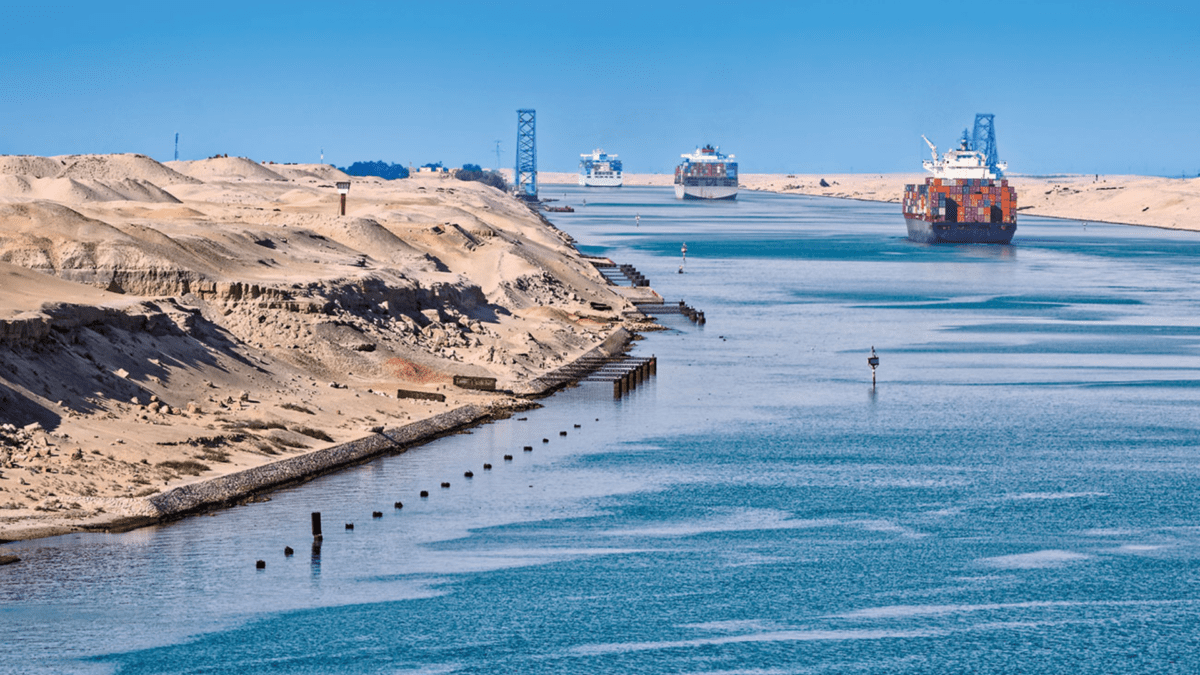
A $2 billion aluminum project in Egypt is taking shape, but the real story is not the factory. It is where it is being built.
Egypt is in talks with Henan Zhongfu Industrial to develop a large-scale production complex in East Port Said, inside the Suez Canal Economic Zone. The location is doing most of the work here.
This is about distance, not just production
The plant will cover more than 1 million square meters and is expected to generate around 3,000 jobs. That is the visible layer.
The deeper layer is logistics.
Aluminum feeds multiple industries at once, packaging, transport, construction, batteries. Moving these inputs across long distances is expensive and increasingly risky. Producing closer to shipping routes cuts both cost and uncertainty.
That is exactly what this project does.
Suez is no longer just a passage
The Suez Canal Economic Zone is quietly turning into something else. Not just a transit corridor, but a manufacturing edge.
From this point, goods can move into Europe, Africa, and the Middle East with fewer friction points. Trade agreements extend that reach even further.
Egypt has been trying to pull in this kind of investment for years. Not symbolic projects, but heavy industry that locks in long-term production.
This one fits that template almost perfectly.
China is relocating capability, not just exporting goods
For Henan Zhongfu, this is not simply expansion. It is relocation logic.
Chinese firms are increasingly placing parts of their production chain outside China. Not because domestic capacity is weak, but because global conditions have changed.
Tariffs, geopolitical tension, and supply chain shocks have made single-country production riskier. The response is to spread capacity across regions that offer access and flexibility.
Egypt checks those boxes.
The bigger shift is already underway
If this project moves forward, it will not transform the market overnight. But it adds another signal to a pattern that is becoming harder to ignore.
Production is moving closer to routes.
Supply chains are becoming regional, not global.
Manufacturing is being placed where access matters more than origin.
The factory will produce aluminum.
The strategy behind it is producing something else, a new map of how and where things get made.