
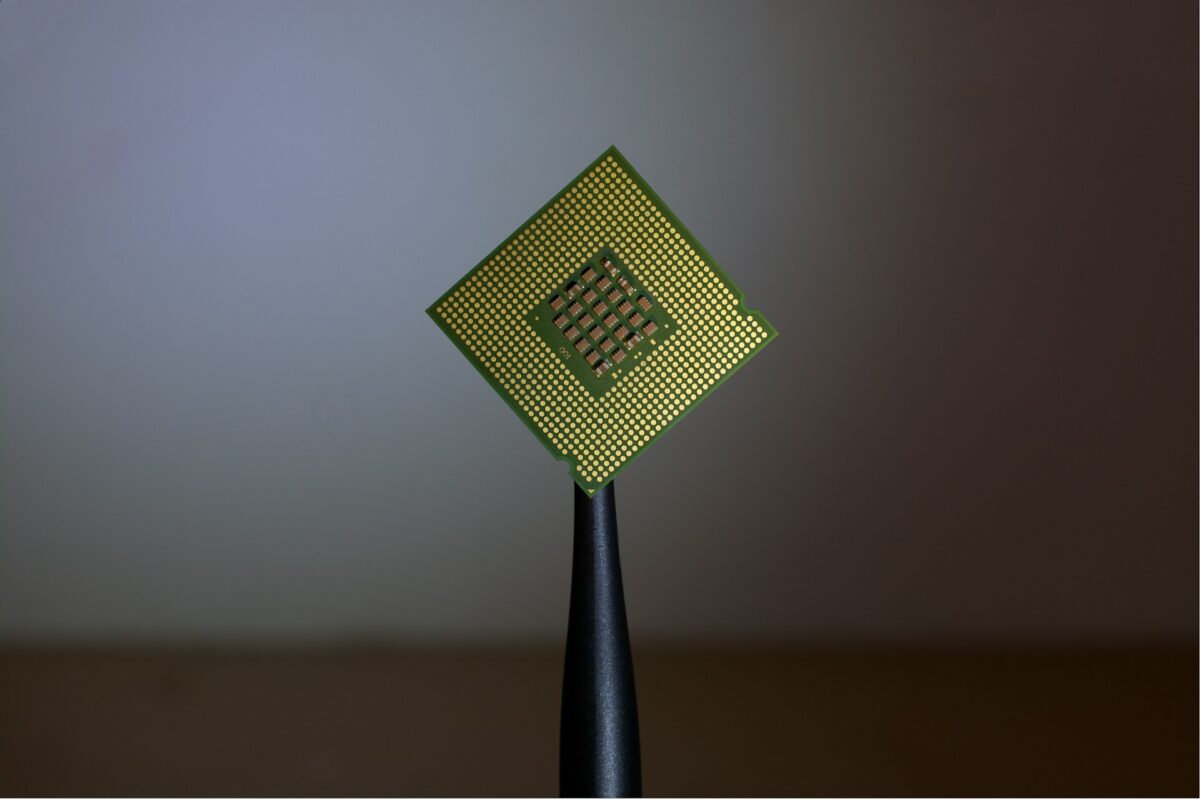
The AI race stopped being just about who has the smartest model. Now it’s about AI infrastructure control, who controls the ground it runs on.
DeepSeek’s V4 preview is a signal of that. The interesting part isn’t the model, it’s that they built the infrastructure to run it on Huawei chips instead of Nvidia. That’s a deliberate choice to stop depending on hardware they don’t control.
When software and hardware start closing ranks like that, the game changes. Model benchmarks matter less. Full-stack control matters more. China seems to understand that earlier than most.
Hardware Is No Longer a Constraint. It Is the Strategy.
Huawei confirmed that its Ascend chips were used in parts of V4’s training process. These chips are currently the most advanced domestic alternative to Nvidia’s GPUs.
The implication is structural. If leading AI models can operate effectively on Chinese hardware, dependency on U.S. supply chains begins to weaken.
This transition has been anticipated but not yet fully realized. DeepSeek’s deployment is an early indication that the shift is becoming operational rather than theoretical.
Performance Positions DeepSeek Near the Top Tier
DeepSeek stated that the V4 Pro model outperforms most open-source competitors in global knowledge benchmarks. It trails only proprietary systems such as Gemini-Pro-3.1 from Google.
The company also introduced a lower-cost “Flash” version, suggesting a dual-track strategy: high-performance enterprise deployment and broader cost-sensitive adoption.
The model is built for agent workloads, not just chat. That means sustained compute, multi-step tasks, the kind of work that actually runs autonomously rather than waiting on a prompt.
That’s where enterprise spending is heading next. Not assistants you talk to. Systems that execute.
Pressure Builds on Nvidia’s Position in China
The timing is not accidental. U.S. export controls are still limiting how freely Nvidia can operate in China. Some advanced chips have been allowed back into the market, but the path is far from smooth. Regulatory uncertainty and commercial friction continue to complicate execution on the ground.
Jensen Huang has been open about the stakes. If developers in China begin building around alternatives, the impact will not be temporary. A shift toward Huawei-based systems would not just affect sales, it would gradually erode Nvidia’s position and influence in one of the world’s most important AI markets.
DeepSeek’s move suggests that this risk is no longer hypothetical.
Market Reaction Signals Confidence in Domestic Supply Chain
Chinese semiconductor stocks responded immediately. Expectations of increased adoption of domestic chips drove gains across the sector.
At the same time, competing AI firms saw declines, reflecting the sensitivity of valuations to shifts in technological positioning.
The response highlights how tightly linked AI development and semiconductor demand have become.
A Crowded Field, No Clear Winner Yet
DeepSeek may be gaining momentum, but it is still operating in a crowded and fast-moving market. Domestic competitors are scaling quickly, each trying to carve out space, while several Western governments have already placed limits on the use of its models over data security concerns.
Adoption is growing, especially across open-source communities, but leadership is far from settled. Analysts at Citigroup do not expect the market to settle around a single dominant player anytime soon. What matters now is less about who is ahead today, and more about who can turn usage into revenue, keep users engaged, and build something that lasts beyond the initial wave of demand.
Where This Is Headed
DeepSeek is now reportedly raising capital at a valuation above $20 billion, drawing interest from major domestic tech players. That kind of demand says a lot about where confidence is building. Funding is not just following innovation anymore, it is moving toward scale and control.
The direction is becoming easier to read. AI competition is no longer centered only on model quality. It is about who owns the infrastructure, who controls deployment, and who can keep the system running without relying on others. By aligning more closely with Huawei, DeepSeek is taking part in a larger effort to build that capability at home.
What this points to is not a single, unified AI market. It looks more like two systems taking shape in parallel, shaped as much by geopolitics as by technology. And once those systems start to mature, they tend to pull further apart rather than come back together.