
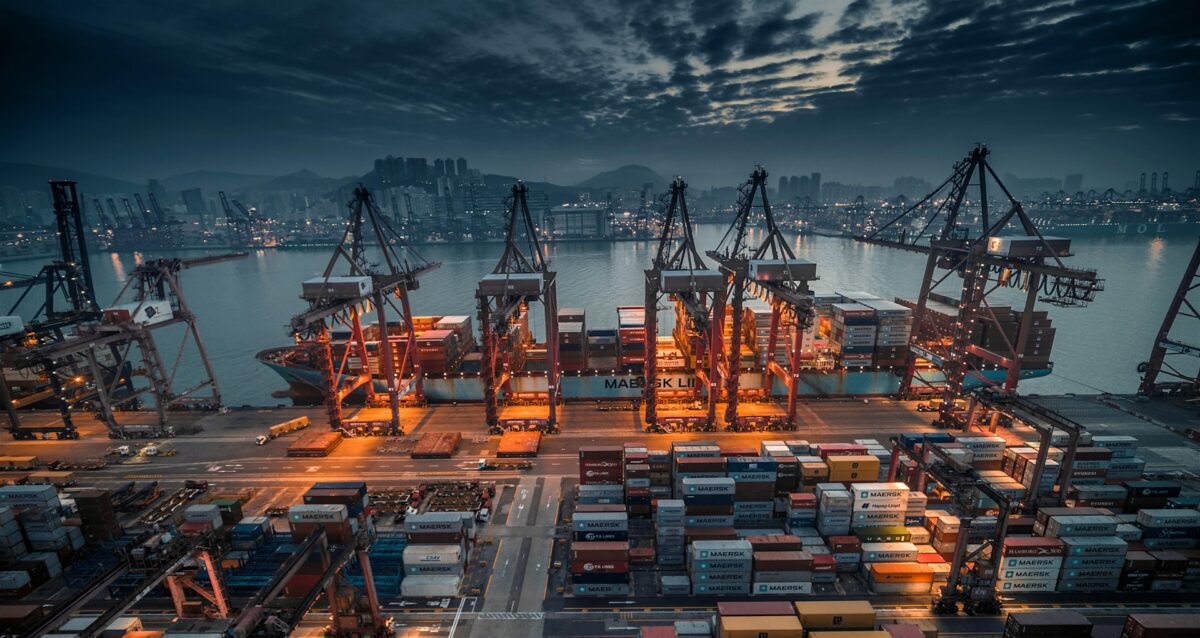
The headline story of 2025 was tariffs. The real story was what survived them. Despite US tariff rates hitting their highest level since World War II, global goods trade grew 6.5 percent in nominal terms, outpacing global GDP growth of 5.4 percent, according to McKinsey Global Institute’s annual trade geometry report published this month.
Geopolitics Is the New Gravity
For nearly a decade, trade has been drifting away from geopolitically distant partners and toward aligned ones. 2025 accelerated that drift into a structural shift. US-China bilateral trade fell by roughly 30 percent, pushing over 165 billion dollars in commerce out of that corridor.
The United States replaced about two-thirds of the gap with imports from other suppliers. Chinese exporters cut prices by an average of 8 percent on consumer goods to absorb the blow and find new buyers. Neither side collapsed. Both adapted, and the world reorganized around them.
ASEAN was the clear winner. Southeast Asian economies deepened their manufacturing role, increasing trade with both the US and China simultaneously. The EU was not as fortunate. It absorbed more Chinese imports displaced from American markets while also facing higher US tariffs on its own exports. A double squeeze with no easy exit.
AI Became the Engine Nobody Predicted
The fastest-growing trade category in 2025 was not energy, not agriculture, not consumer goods. It was AI-related hardware. Semiconductors and data center equipment alone accounted for one-third of all global trade growth. Taiwan, South Korea, and parts of Southeast Asia drove supply. The United States absorbed the bulk of demand. This is not a cyclical surge. The infrastructure buildout behind AI adoption has years left to run, and the trade flows it generates are becoming a permanent feature of the global economy.
The Tariff Floor Keeps Shifting
In February 2026, the US Supreme Court struck down the legal basis for many of the economy-specific tariffs imposed under the International Emergency Economic Powers Act. The administration responded the same day, invoking Section 122 of the Trade Act to implement a temporary universal rate of 10 percent while initiating investigations to justify new product-specific tariffs. The effective rate currently sits around 12 percent. The legal mechanism changed. The direction did not.
Other countries are moving the same way. Mexico introduced surcharges of up to nearly 50 percent on a range of imports in early 2026. The EU and India proposed new safeguards on steel and chemicals. Latin American and African governments raised barriers against Chinese goods flooding their markets after being redirected from the US. Protectionism is no longer an American policy. It is the global default.
What Holds and What Does Not
McKinsey identifies three trends it considers durable: the growing weight of AI in trade flows, the continued expansion of emerging markets as trade partners, and China’s shift toward supplying industrial components and capital goods rather than finished consumer products. China is becoming the factory that supplies the factories.
What is not durable is the assumption that any single trade relationship is stable. The US-Canada relationship, historically frictionless, absorbed 25 percent tariffs on steel and consumer goods. The EU-US Turnberry trade deal is on hold over Greenland. Alliances that took decades to build are being repriced in months. Companies that built supply chains around predictability are now building them around optionality. That shift, more than any individual tariff rate, defines the new geometry.