
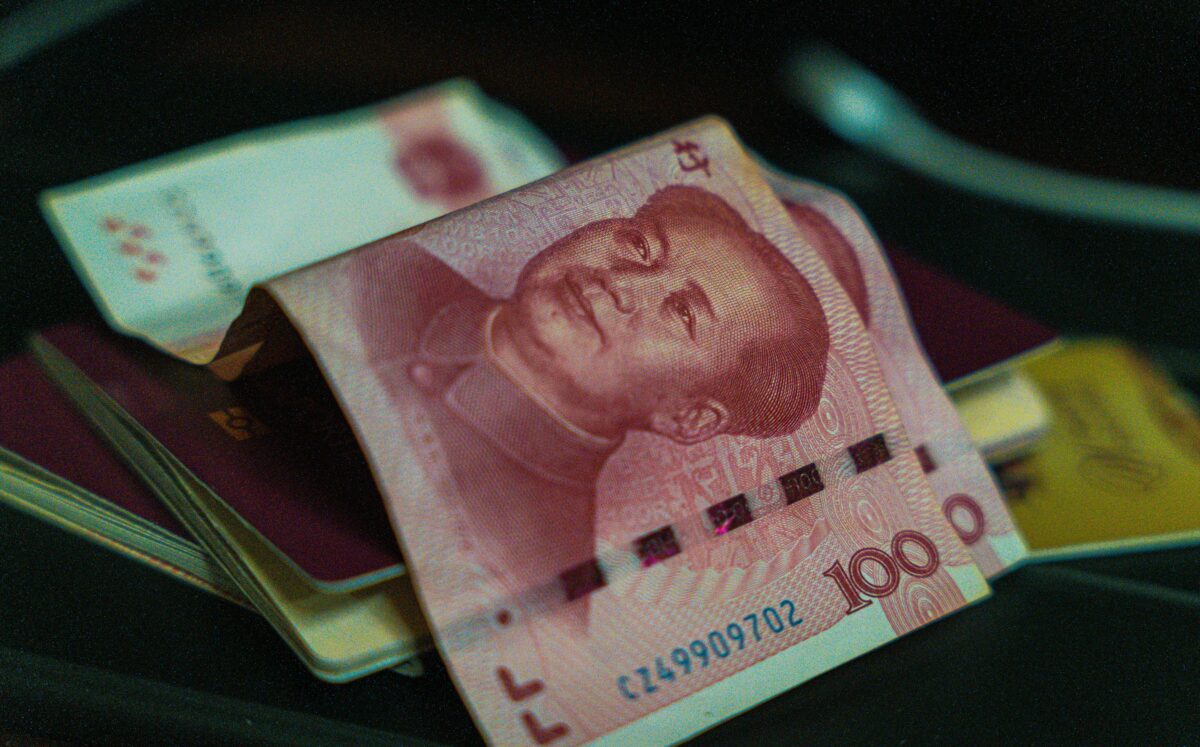
China is no longer ambiguous about its currency ambitions. Under Xi Jinping, the push for a stronger yuan has moved from technical policy language into strategic doctrine. Beijing wants a currency that is widely used in trade, finance, and eventually, reserves. That ambition is clear. The distance to that goal is not.
The Data Still Favors the Dollar
The numbers are unambiguous. According to the IMF’s latest COFER survey, the yuan accounted for just 1.93% of global foreign exchange reserves in Q3 2025, down from 1.99% the previous quarter, while the dollar held 56.92% and the euro 20.33%.
That is not a marginal gap. It reflects decades of accumulated trust, liquidity, and institutional depth.
In global payments, the picture is similarly sobering. According to SWIFT, yuan usage in international payments fell to 2.9% in May 2025, down from 4.7% in May 2024, dropping the currency behind the Canadian dollar to sixth place in the rankings.
The yuan is present in the system. It is not central to it.
Where the Yuan Is Gaining Ground
The shift is happening below the surface, primarily in trade and settlement. China’s CIPS cross-border payment network processed RMB 175 trillion in transactions during 2024, a 43% year-on-year increase, with 1,629 users across 119 countries by year-end.
This does not replace SWIFT. It reduces dependence on it. That distinction defines Beijing’s approach: not disruption, but gradual parallelization.
At the bilateral level, momentum is clearer. In the first quarter of 2025, 31% of Chinese goods trade was conducted in yuan, with yuan usage growing fastest in Europe, largely driven by Russia’s shift away from dollar and euro payments, and in Asian trade corridors.
Since March 2023, the yuan has accounted for more than half of all outbound cross-border payments from China each month, consistently outpacing the dollar in that specific flow.
Structural Barriers Remain
Despite the momentum, the yuan faces constraints that go to the core of reserve currency status.
China maintains capital controls. The currency is not fully convertible. Foreign investors hold just 2.4% of Chinese bond markets, and that figure has been declining, likely reflecting low Chinese yields relative to other countries and elevated geopolitical risk.
Legal predictability and institutional transparency remain concerns for global investors. These are not short-term friction points. They are foundational.
Reserve currencies are built on trust that extends beyond economics. They require systems where capital moves freely, risks are clearly priced, and rules are consistently applied. The yuan is not there yet.
A More Realistic Outcome: Dual Systems
The global monetary system is not moving toward a sudden replacement of the dollar. It is evolving toward coexistence.
In 2025, following the implementation of tariffs under the second Trump administration, financial institutions began reassessing the dollar’s role as the dominant reserve currency.
But reassessment is not replacement. The dollar remains the primary reserve and funding currency. The euro continues as a regional anchor. The yuan is emerging as a transactional and geopolitical tool, particularly in bilateral trade and state-backed financing. This creates a layered system rather than a single dominant structure.
Geopolitics Will Shape the Next Phase
Currency dynamics will not be determined by economics alone.
A more assertive U.S. foreign policy stance reinforces the strategic use of financial tools such as sanctions and trade restrictions. Such moves may strengthen the dollar’s central position in the short term while simultaneously pushing more countries toward alternative settlement channels over time.
China will continue expanding yuan usage through trade networks, financing structures, and institutional partnerships. The People’s Bank of China has signed bilateral currency swap agreements with over 40 foreign central banks, amounting to approximately RMB 4.31 trillion, with some counterparties, including Argentina and Russia, drawing on these agreements when cut off from Western financial systems.
This creates a slow-moving but persistent tension between parallel systems.
An Overlooked Factor: Digital Infrastructure
A parallel development is unfolding outside traditional finance. The People’s Bank of China began paying interest on digital yuan balances on 1 January 2026, making it the first central bank digital currency globally to do so, while also announcing plans to improve cross-border infrastructure for yuan usage.
Digital assets are not yet substitutes for sovereign reserve currencies. But they are beginning to influence how value is stored and transferred across borders, adding another layer of complexity to an already contested system.
The Long Game
The yuan is still far from becoming a true global reserve currency. The structural gap with the dollar remains wide. China’s central bank governor has publicly articulated a vision for a more multipolar currency system, but even official statistics show that international yuan usage outside of China’s own bilateral trade flows has not meaningfully increased.
What is changing is the direction of architecture. China is building parallel financial infrastructure where the yuan plays a larger role. The United States continues to anchor the existing system while using its dominance as a strategic lever. Other actors are adjusting between these poles.
The result is not a transition. It is a prolonged contest. The dollar and the yuan are not replacing each other. They are entering a long phase of strategic competition that will unfold gradually, often away from public view. Less a shift in leadership, more a slow rebalancing of power.