
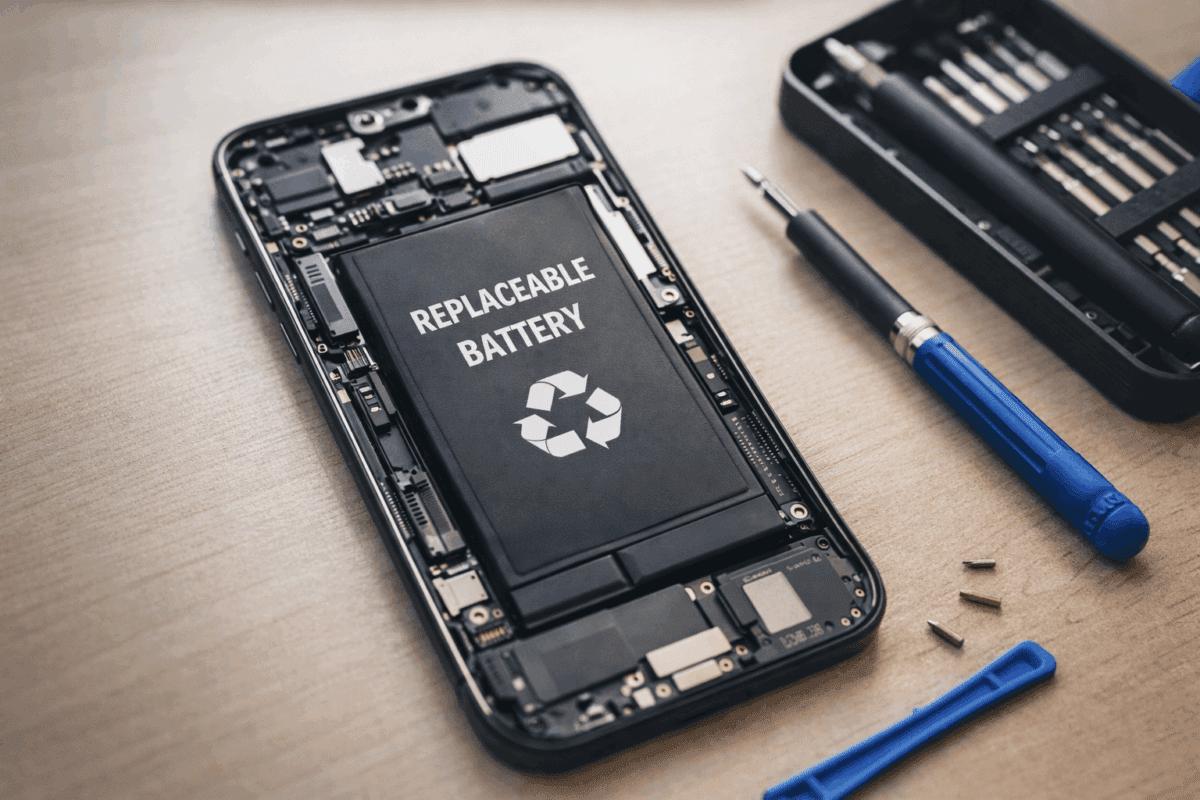
A new European Union regulation set to take effect in 2027 will require smartphones sold across the bloc to feature replaceable batteries.
The change targets design decisions that made modern phones difficult to repair, and its consequences extend well beyond Europe.
What the Regulation Actually Requires
The rule does not demand a return to removable back covers. It requires that batteries be replaceable using commonly available tools without causing damage to the device. That single requirement forces manufacturers to rethink how phones are assembled from the inside out.
For years, smartphones relied on sealed bodies, strong adhesives, and tightly packed components. These choices produced thinner, more water-resistant devices, but made battery replacement costly and impractical. The regulation shifts that balance.
Apple
For Apple, this is as much about control as engineering. The company has begun adapting already. Recent iPhone models introduced battery systems designed for less invasive removal, suggesting Apple anticipated regulatory pressure ahead of the deadline.
The challenge is structural. Easier battery access gives independent repair providers more ground. Apple will likely need to adjust its repair programs to stay compliant while protecting its ecosystem. The exterior of iPhones will look unchanged. The internal architecture will not.
Samsung
Samsung enters this transition with more flexibility. Its presence across multiple price segments allows more gradual design adaptation. Some Galaxy devices already carry stronger repairability ratings than Apple’s lineup.
That advantage has limits. Modern Galaxy phones still rely on sealed construction and adhesive assembly. Meeting the EU standard requires internal changes, particularly in how batteries are secured, without sacrificing durability or water resistance.
The Global Dimension
The EU has demonstrated its ability to set global tech standards before. The push to USB-C charging ports produced a single worldwide standard rather than region-specific variants. Manufacturers chose standardization over the cost and complexity of separate production lines.
The same logic applies here. A single compliant design is more efficient than maintaining parallel product lines. Consumers outside Europe may benefit from longer-lasting devices as a direct consequence of a regulation they never voted on.
What Actually Changes
Battery degradation drives a significant share of smartphone upgrades. When replacement is difficult or expensive, buying a new device becomes the easier option. From 2027, that calculation changes.
The device in your hand may look identical. But who controls its lifespan will not be.