
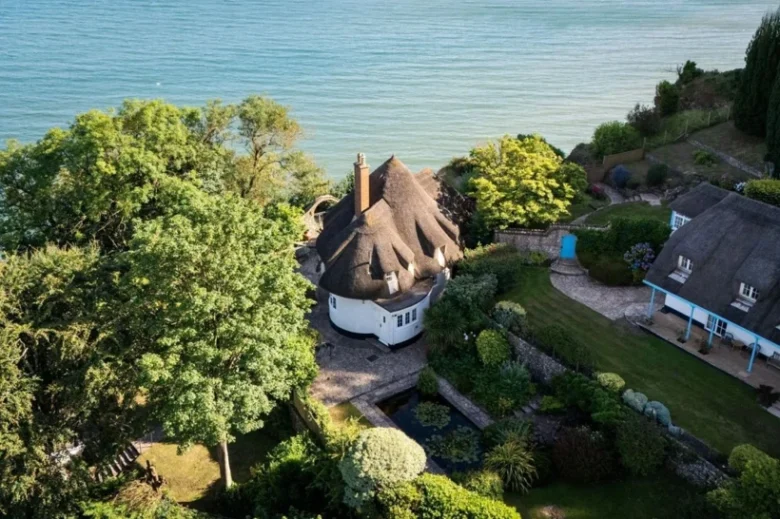
A luxury sea-view home on England’s south coast has lost much of its market value—not because of the building itself, but because of the unstable cliff only metres from its garden.
The thatched property near Sidmouth in Devon was reportedly valued at more than £1 million. It was later offered at auction with a guide price of £250,000, but failed to sell.
Three bids were submitted. The highest reached £249,000, leaving the property unsold despite being offered at roughly a quarter of its reported market value.
The sharp decline has been linked to coastal erosion and a major cliff collapse that affected the land in 2024.
Part of the Garden Was Lost
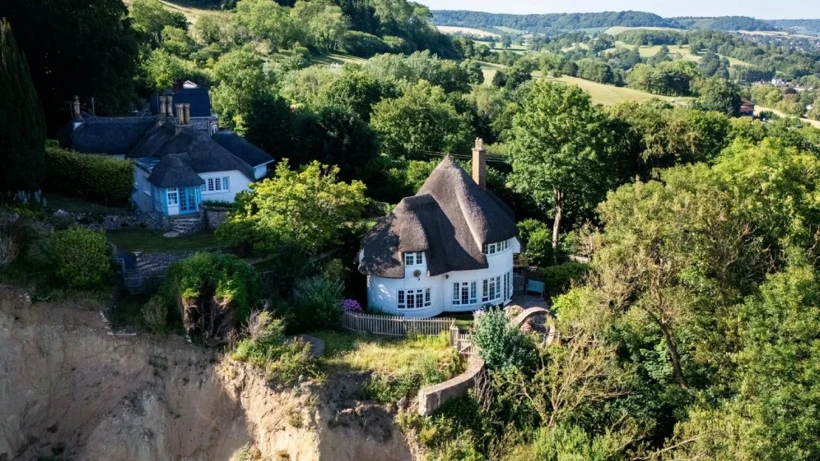
The house stands close to the edge of a coastal cliff approximately 122 metres high.
During a collapse in 2024, part of the garden fell away, leaving the property only a few metres from the edge. Its elevated position and sweeping views of the English Channel were once among its strongest selling points. They are now inseparable from concerns over the stability of the land.
The property listing states that the site has been affected by coastal erosion in recent years. It also acknowledges that a collapse occurred at the far end of the garden.
A detailed geological report was made available to prospective buyers, allowing them to assess the condition of the land and the potential risks.
The report, however, did not remove the uncertainty surrounding the property’s future.
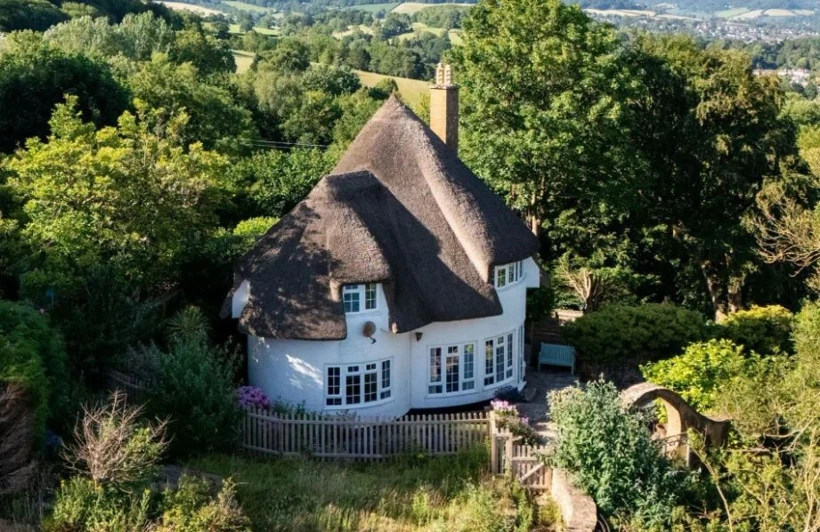
Bought for £695,000 in 2011
The current owners purchased the house for £695,000 in 2011.
Its distinctive thatched roof, coastal setting and uninterrupted sea views later helped push its estimated market value above £1 million, according to reports.
Repeated cliff collapses and continuing erosion have since changed the calculation for potential buyers.
Anyone considering the property must assess more than its rooms, views and location. Future land loss, insurance availability, maintenance costs and the ability to resell the home may all influence its real value.
The failed auction shows how quickly environmental risk can outweigh conventional measures of luxury.
Why Coastal Cliffs Can Collapse Without Warning
Coastal cliffs are weakened by forces acting from both the sea and the land.
Waves gradually erode the base, removing material that supports the rock and soil above. Rainwater can also penetrate cracks and porous layers, increasing their weight and reducing their stability.
As the lower section becomes weaker, the upper mass may eventually lose support and collapse.
This process does not usually occur at a steady or predictable rate. A cliff may appear unchanged for months or years before heavy rainfall, powerful waves or existing fractures trigger a sudden failure.
Geological studies can identify vulnerable areas and assess current conditions. They cannot predict with certainty whether, when or where another collapse may occur.
That uncertainty is especially significant for buildings located only a short distance from the edge.
When a Sea View Becomes a Financial Liability
The Sidmouth house demonstrates how coastal erosion can transform the economics of a property.
A retreat of only a few metres can reduce the size of a garden, raise concerns about the stability of the land and make insurance or future financing more difficult. Buyers are no longer valuing only the building as it stands today; they are also calculating what may happen to the ground beneath it.
Following the unsuccessful auction, the owner is expected to consider further offers. The property could also return to auction at a lower guide price.
A future buyer would acquire an unusual home with an exceptional view. They would also assume a level of geological and financial risk that has already erased much of the property’s reported value.