
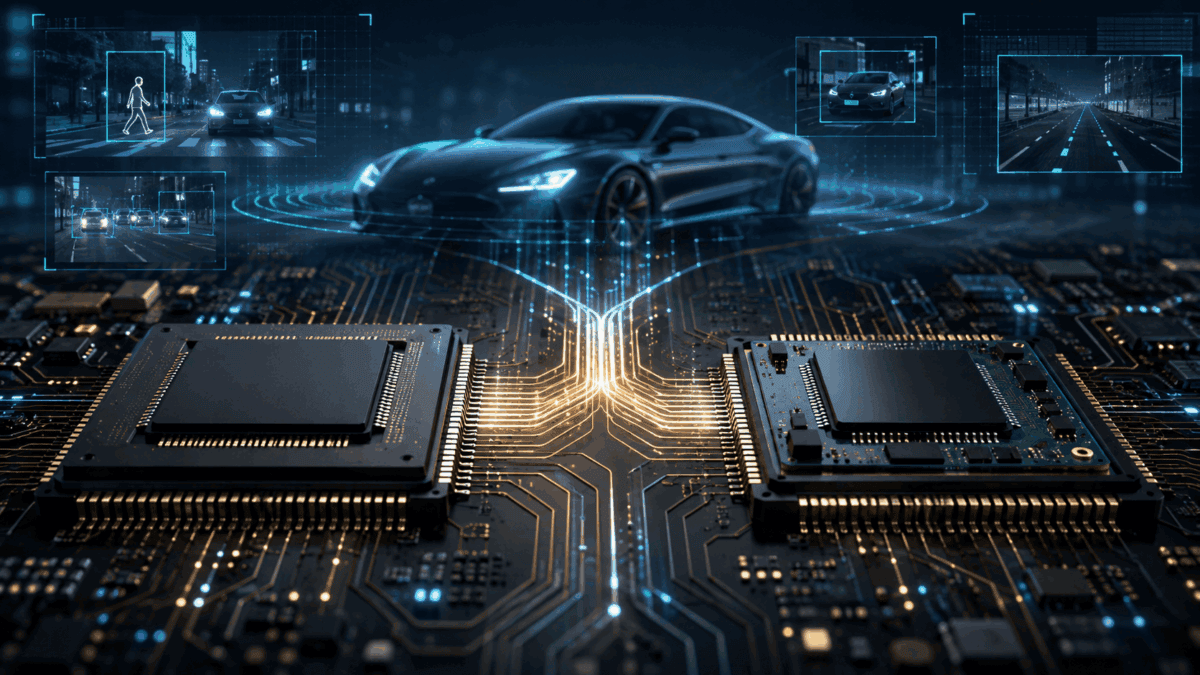
European chipmaker NXP Semiconductors is reportedly considering the acquisition of California-based Ambarella in a deal worth more than $3 billion, a move that could significantly strengthen its position in automotive artificial intelligence.
The talks are continuing, but no agreement has been reached. Other buyers could enter the process, and the negotiations may still collapse, according to the Financial Times, which first reported the discussions. Neither NXP nor Ambarella has commented publicly.
Ambarella shares jumped nearly 20 percent after the report, lifting the company’s market value to almost $3.9 billion. NXP shares fell by more than 3 percent, suggesting investors see the strategic logic but remain cautious about the potential price.
Why Ambarella Matters to NXP
NXP is already one of the world’s largest suppliers of automotive semiconductors. Its chips are used for vehicle networking, radar, secure access, power management and the processors that control increasingly complex electronic systems.
Automotive customers generated $7.1 billion of NXP’s $12.3 billion revenue in 2025, making vehicles by far its largest market. Automotive sales also rose 6.5 percent year over year to $1.78 billion during the first quarter of 2026.
Ambarella would bring a more specialized capability: processors that analyse images and sensor data directly inside vehicles, cameras, drones and robots.
Its systems-on-chip combine computer vision, image processing and AI acceleration while using relatively little power. In a vehicle, those chips can help interpret information from cameras used for driver assistance, occupant monitoring and automated driving.
This is part of the market known as edge AI. Instead of sending every image to a remote data centre, the device processes much of the information locally. That reduces delays, limits bandwidth use and allows systems to operate when cloud access is unavailable.
For a car travelling at speed, even a small delay in recognizing a pedestrian, another vehicle or a road marking can matter. Ambarella’s technology would therefore complement NXP’s existing processors, radar products and vehicle networking systems.
The Price Reflects Future Potential, Not Current Earnings
Ambarella is growing rapidly, but it remains far smaller than NXP.
The company generated record revenue of $390.7 million in the financial year ending January 31, 2026, up 37.2 percent from the previous year. Edge AI processors accounted for around 80 percent of its annual revenue.
Ambarella nevertheless recorded a GAAP net loss of $75.9 million for the year. A transaction valued above $3 billion would consequently price the business at more than seven times its latest annual revenue, even before considering the higher market value reached after reports of the talks.
That valuation shows what NXP would really be buying: not Ambarella’s present profits, but its chip architecture, computer-vision software, engineers and position in a market expected to expand as more AI processing moves into physical devices.
Developing comparable technology internally would require time, specialist talent and continued research spending. Acquiring Ambarella could give NXP a faster route into advanced camera processing while allowing it to offer carmakers a broader package of sensors, processors, connectivity and software.
The combination could also make NXP less dependent on selling individual components. Carmakers are increasingly seeking integrated computing platforms capable of managing several vehicle functions together.
A Strategic Deal with Regulatory Risk
The potential acquisition comes during a new period of consolidation in the semiconductor industry, as established manufacturers seek AI technology beyond the processors used in large data centres. Ambarella’s chips are designed for the opposite end of the computing market: compact devices that must make decisions quickly and with limited energy.
A final deal would still face regulatory scrutiny. Semiconductor acquisitions can require approval in several jurisdictions, particularly when the companies supply automotive systems and other strategically important technologies.
NXP has direct experience with that risk. Qualcomm agreed to acquire the company in 2016, but the transaction was abandoned in 2018 after failing to receive approval from Chinese regulators.
For now, the Ambarella discussions remain preliminary. But they reveal NXP’s broader objective: to move beyond the chips that connect and control vehicles and secure a larger role in the processors that allow those vehicles to interpret the world around them.