
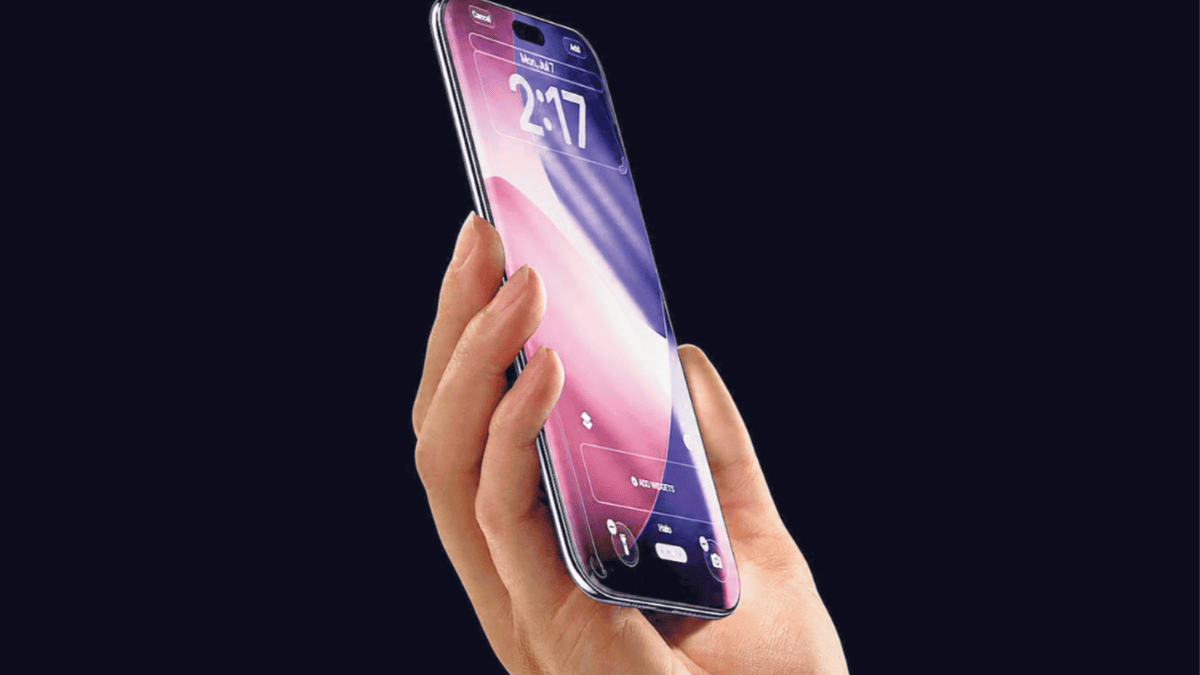
Apple is reportedly preparing a major redesign of the iPhone for its 20th anniversary in 2027, with curved glass, a nearly edge-to-edge display and a new generation of chips among the changes under development.
The anniversary model is often referred to in reports as the “iPhone 20,” although Apple has not confirmed its name or any details about the device. Current reports suggest the company could use the milestone for one of the most significant changes to the iPhone’s appearance since the iPhone X arrived in 2017.
The timing carries particular significance for Apple. Steve Jobs introduced the original iPhone on January 9, 2007, and the device went on sale in the United States on June 29 that year. June 29, 2027 will therefore mark 20 years since the first iPhone reached consumers.
A display that could reshape the iPhone
The most important changes appear to center on the screen.
Bloomberg journalist Mark Gurman has reported that Apple is developing 20th-anniversary models with a nearly edge-to-edge display and curved glass wrapping around the sides of the phone. The devices are expected to retain dimensions broadly similar to Apple’s premium iPhones while substantially reducing the visible boundaries around the screen.
Earlier reports suggested Apple’s longer-term goal is a mostly glass iPhone without visible display cutouts, creating the appearance of an uninterrupted screen across the front of the device. However, it remains uncertain whether Apple will be able to achieve that completely with the 2027 model.
The main challenge is hiding hardware currently placed within the display area.
Face ID relies on several sensors, while the front-facing camera still requires a clear path for light. Moving those components beneath an OLED panel without compromising facial recognition or image quality presents a significant engineering problem.
Reports remain divided over how far Apple has progressed. Some suggest the company is testing under-display Face ID and camera technology, while display industry analyst Ross Young has questioned whether a completely cutout-free screen will be ready by 2027.
That means the final anniversary iPhone could still retain a small display opening even if its bezels become dramatically thinner.
New OLED technology could make the display thinner
Apple is also reportedly considering a significant change to the construction of the OLED panel itself.
Supply-chain reports indicate that Samsung could produce a custom micro-curved OLED display using Color Filter on Encapsulation, or CoE, technology for the anniversary model.
Conventional OLED displays typically use a polarizing film to reduce reflections. CoE removes that layer and instead applies the color filter directly to the display’s encapsulation layer.
The result is a thinner display stack that allows more light to pass through. In principle, this can improve brightness while reducing power consumption — useful properties if Apple is attempting to build a thinner phone dominated by curved glass.
Reports suggest Apple is seeking a shallow curve around all four edges rather than the pronounced “waterfall” displays previously used by some smartphone manufacturers. The approach could allow the screen to visually blend into the frame without heavily distorting content near the edges.
If the design reaches production, it would represent a more substantial shift than the incremental reductions in bezel size seen across recent iPhone generations.
A new 2-nanometer A21 chip is also expected
Changes are also expected inside the phone.
The premium 2027 iPhones are reportedly planned around an A21-series processor built using a 2-nanometer manufacturing process. Gurman has reported that Apple intends to continue using 2nm technology for the 2027 generation before moving toward more advanced 1.4nm production in later chips.
The A21 would follow the A20 generation expected to appear in earlier models.
Moving to smaller semiconductor processes generally allows chip designers to place more transistors within the same area while targeting improvements in performance and energy efficiency. The exact gains, however, will depend on Apple’s final chip architecture.
Will Apple actually call it the iPhone 20?
The name remains one of the least certain parts of the story.
Following Apple’s conventional numbering sequence, the 2027 generation would normally fall within the iPhone 19 cycle. Reports have nevertheless suggested that Apple could skip the number and adopt iPhone 20 or another anniversary-focused name.
There is precedent for such a move.
In 2017, Apple introduced the iPhone 8 and iPhone X in the same year, skipping the iPhone 9 name. The iPhone X marked the tenth anniversary of the original iPhone and introduced Face ID, removed the Home button and established the basic all-screen design language Apple has continued to develop.
Whether Apple repeats that naming strategy in 2027 remains unknown.
Apple has not announced the anniversary iPhone, and several of the technologies associated with it are still reportedly being tested. Individual features could therefore change before the expected 2027 launch.
What appears increasingly consistent across the reports is that Apple is preparing a substantial hardware redesign for the iPhone’s 20th anniversary — one focused primarily on reducing the visible boundary between the display and the device itself.