
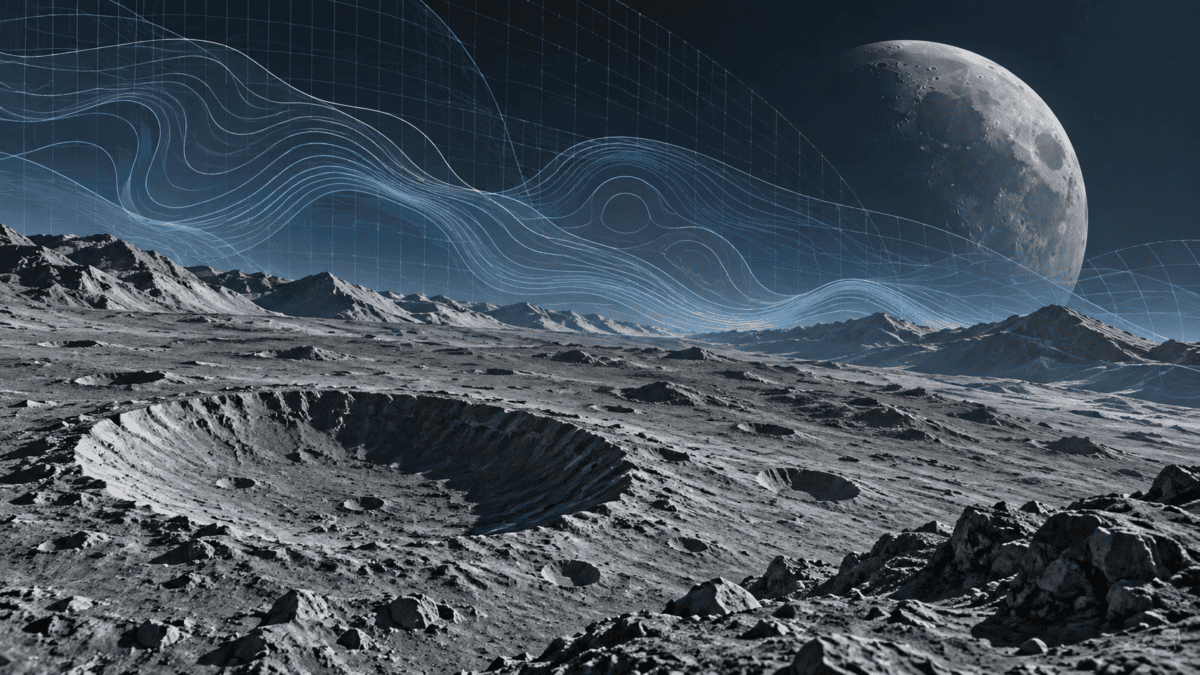
A new lunar AI model could help scientists decide where to look for water ice on the Moon. NASA and IBM released the open-source tool on September 10, making it available for researchers studying the lunar surface.
The system brings together observations from different instruments and at different resolutions. That allows scientists to examine relationships across datasets instead of working through separate maps and images individually.
Potential ice deposits are one target. IBM reports that, in a technical comparison, the model reduced prediction error by up to 22% against a specified benchmark when identifying areas with high ice potential.
That result does not establish that ice exists at any particular location. It offers a way to identify promising areas for further investigation.
Researchers can also apply the model to craters and volcanic features. Those studies could improve understanding of the Moon’s history while informing decisions about future surface operations.
The immediate development is access: scientists can now work with the released model and test how useful it is for their own lunar research.
Sources: IBM’s model release, September 10, 2026.