
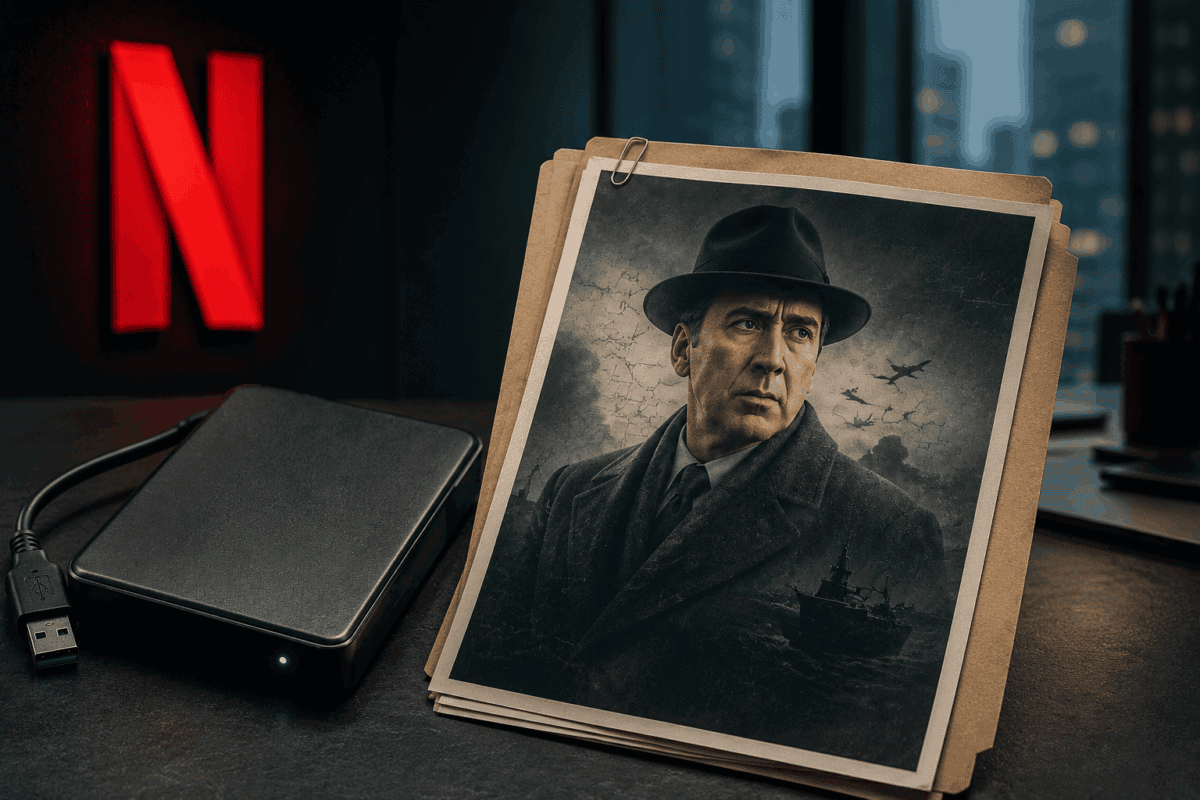
Netflix is facing a $105 million lawsuit after a hard drive containing an unencrypted copy of an unreleased Nicolas Cage film was stolen from one of the company’s Hollywood offices.
The producers of Fortitude, a World War II espionage drama, claim the theft has placed the film’s commercial future at risk just as they were seeking a global distribution deal. Netflix denies responsibility, arguing that the copy was delivered without standard security protections.
The film was delivered for a private screening
Op-Fortitude Ltd. and writer-producer Simon Afram filed the lawsuit in California federal court on July 29, 2026.
According to the complaint, a representative of the production company hand-delivered a hard drive containing the film to Netflix’s Hollywood offices on June 15. Netflix was considering whether to acquire distribution rights and screened the film the following day.
The producers say Netflix knew the files were not encrypted and had been instructed to delete the film from its projection system after the screening. When representatives later attempted to recover the drive, they were told that several hard drives had been stolen from office desks.
The missing drive contained a Digital Cinema Package, or DCP—the high-quality digital format commonly used for cinema screenings and private industry presentations.
Such files are often encrypted and linked to a digital key that restricts when and where a film can be played. Because the copy of Fortitude was allegedly delivered without encryption, the lawsuit claims anyone who gained access to the drive could potentially open or duplicate the files without obtaining a separate playback key.
There is currently no public evidence that the film has appeared on piracy websites or been distributed without authorization. The producers’ case instead rests on the commercial risk created by losing control of an accessible, high-quality copy.
Producers say the theft damaged the film’s value
Afram says he invested more than $45 million and seven years in producing Fortitude. At the time of the theft, the filmmakers were attempting to secure a distributor for the completed project.
The lawsuit argues that the missing copy could discourage potential buyers. A distributor considering a major acquisition and marketing campaign would now have to account for the possibility that the film could appear online before or shortly after its official release.
The producers also claim that the uncertainty may complicate insurance coverage, release planning and awards campaigns.
The $105 million figure is the amount sought by the plaintiffs. It is not a court-verified valuation of the film or an award already granted against Netflix.
The complaint includes claims involving breach of contract and the failure to safeguard and return property placed in Netflix’s custody. The allegations have not yet been tested in court.
Netflix disputes responsibility
Netflix says it does not own the rights to Fortitude and rejects the claim that it should bear the financial consequences of the theft.
The company argues that the filmmakers delivered the movie without normal industry safeguards. Netflix says it investigated the incident and offered to monitor piracy platforms for signs that the film had been uploaded or distributed.
That response establishes the central dispute in the case. The producers say Netflix accepted custody of the drive while knowing it was unencrypted. Netflix maintains that responsibility for protecting such a valuable digital asset remained with the film’s owners.
A spy thriller caught in a security dispute
Directed by Simon West, Fortitude stars Nicolas Cage as Duško Popov, a real-life double agent associated with Allied deception operations during World War II. The cast also includes Ben Kingsley and Michael Sheen.
The lawsuit does not claim that every copy of the film or its original production files was stolen. The dispute concerns an unencrypted screening copy that disappeared while the film was being presented to a potential distributor.
The case highlights a basic problem in modern film distribution: a movie worth tens of millions of dollars can be physically stored on a drive small enough to be removed from an office desk.
Whether Netflix is legally responsible will depend on what obligations it accepted when it received the drive. The broader security lesson is already clear: once valuable media leaves a controlled production environment, encryption can be as important as the physical security of the device carrying it.