
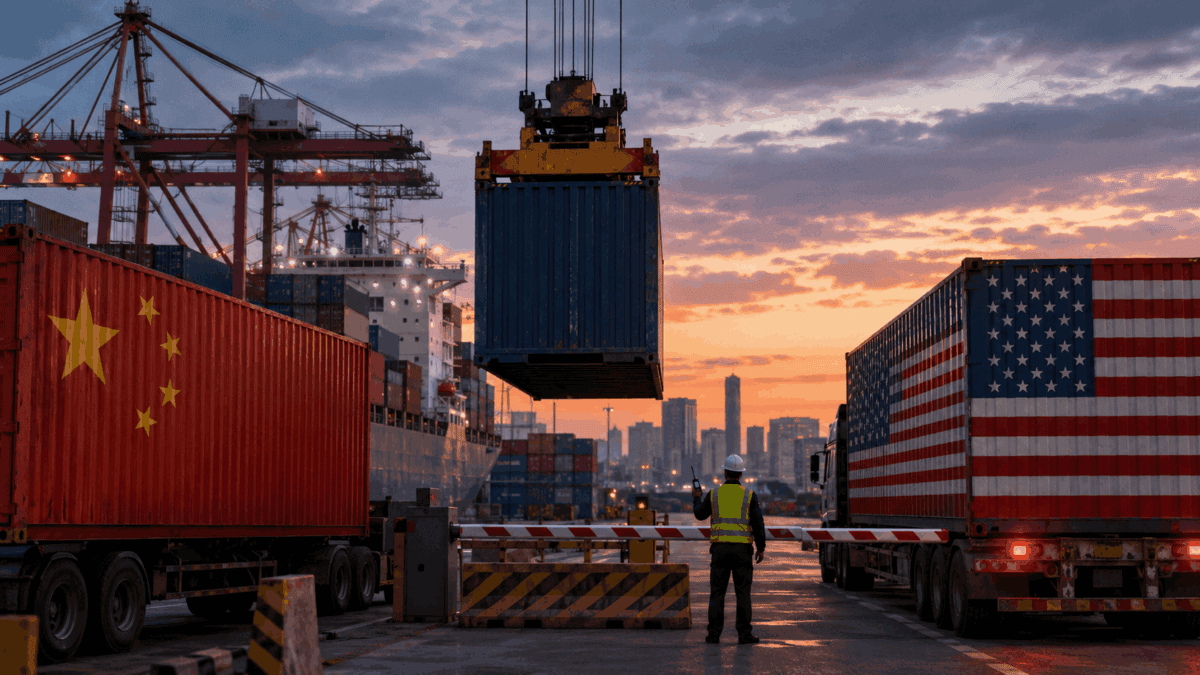
The United States has added 43 Chinese companies to a forced-labor enforcement list, extending import restrictions across electronics, pharmaceuticals, metals, food, cotton and lithium supply chains.
The US Department of Homeland Security said the additions bring the Uyghur Forced Labor Prevention Act Entity List from 144 to 187 companies. It is the largest single expansion of the list since the law was enacted in December 2021. The new restrictions take effect on August 3.
Importers will carry the burden of proof
The measure is different from a conventional tariff. US Customs and Border Protection will presume that goods produced wholly or partly by the listed companies are connected to prohibited forced labor.
Importers can challenge that presumption, but they must provide detailed evidence showing that the goods and their raw materials were produced without forced labor. Shipments may be detained or refused entry when the documentation is considered insufficient.
The rules can also affect companies that do not buy directly from a listed Chinese supplier. A manufacturer may still face customs scrutiny when components, metals or other materials from one of the companies appear further down its supply chain.
The latest additions include businesses involved in pharmaceuticals, aluminum, copper, cotton, food, electronics and lithium production. Among them is Hunan Aihua Group, a major capacitor manufacturer whose products are used in consumer electronics, vehicles, industrial equipment and renewable-energy systems.
The company was listed because US authorities believe it sourced chemical foil and other materials from Xinjiang. Hunan Aihua Group did not immediately respond to requests for comment reported by Reuters.
The scale of existing enforcement shows that the measure is more than a political warning. US Customs and Border Protection has stopped more than 24,300 shipments valued at nearly $1 billion under the system, according to the Department of Homeland Security.
China rejects the accusations
China’s Ministry of Commerce said the US decision had no factual basis and described it as economic coercion against Chinese companies.
Beijing denies that forced labor exists in Xinjiang and argues that the restrictions damage companies’ legitimate rights while disrupting global industrial and supply chains. The ministry called on Washington to reverse the measures and said China would act to protect the affected businesses, without detailing possible countermeasures.
For global manufacturers, the immediate consequence will be greater pressure to identify the origin of every material and component entering the US market. Companies may need more detailed supplier records, independent audits and documentation covering production stages beyond their direct contractors.
The latest move shows how US-China trade pressure is shifting beyond tariffs. Access to the American market increasingly depends on whether businesses can demonstrate exactly where their products—and the materials inside them—were produced.