
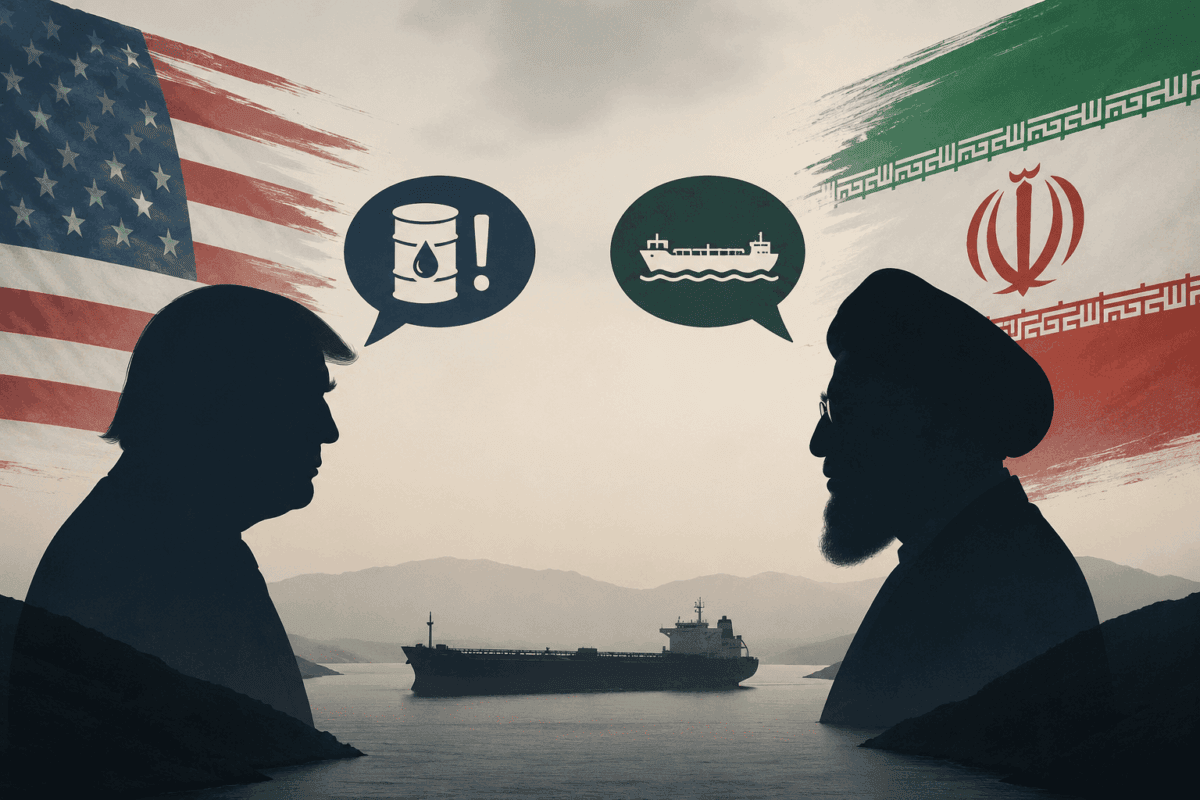
The confrontation between the United States and Iran is unfolding not only through missiles and military operations, but also through increasingly direct threats against oil exports, shipping routes and critical infrastructure.
Iranian Parliament Speaker Mohammad Bagher Ghalibaf warned that no country in the region would be able to sell oil if Iran was prevented from exporting its own supplies.
“The equation of this war is clear: either all of us or none of us,” Ghalibaf wrote on social media.
“If we cannot sell our oil, no one will sell oil in this region. If our security is not guaranteed, no infrastructure will be safe,” he added.
Ghalibaf also linked security in the Strait of Hormuz to the withdrawal of US forces from the region, arguing that conditions in the waterway would not return to their pre-war state.
Threats move beyond the battlefield
His statement followed a warning from US President Donald Trump, who said Iranian bridges or power plants could be targeted in response to attacks on ships in the Strait of Hormuz.
The exchange reflects a broader struggle to control the political and economic pressure surrounding the conflict.
Washington is signalling that attacks on maritime traffic would bring direct consequences for Iranian infrastructure. Tehran, in turn, is warning that efforts to restrict its oil exports could disrupt energy shipments across the wider Gulf.
Both messages are built around the same principle: the economic cost of the conflict will not remain limited to one country.
Hormuz becomes a pressure point
The Strait of Hormuz gives these statements greater weight. It is one of the world’s most important energy transit routes, and any prolonged disruption could affect oil exports, shipping costs and global fuel prices.
Recent tensions around the waterway have already increased concern among traders, shipping companies and Gulf governments. Oil prices have risen amid fears that military escalation could restrict supplies moving through the region.
The warnings therefore appear directed at a wider audience than the two governments involved. They also place pressure on regional states, energy markets and countries seeking to prevent the conflict from spreading.
The military situation may still be shaped by attacks on the ground, but the struggle now extends well beyond the battlefield. Oil routes, ports and energy infrastructure have become part of the pressure both sides are attempting to exert.
In the US-Iran confrontation, the war of words is no longer separate from the conflict. It has become one of its main strategic tools.