
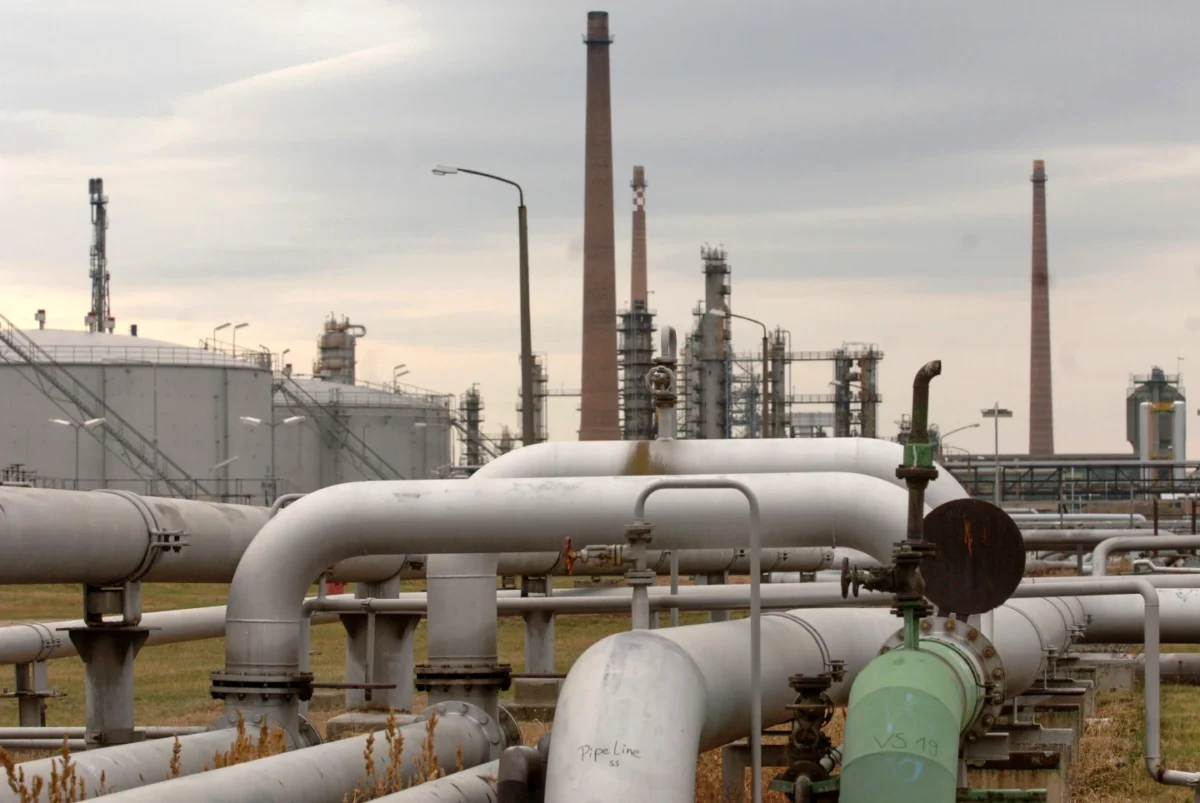
Ukraine is set to restart Russian oil shipments via the Druzhba pipeline within hours after completing repairs to infrastructure damaged in a Russian attack.
The timeline for resumption is based on information provided by a Ukrainian official and, according to Reuters, shipments could restart within hours.
What appears to be a technical restart is, in effect, unfolding alongside a broader political shift inside the European Union.
Hungary and Slovakia rely on this route for crude supply, and the disruption extended beyond energy markets into EU decision-making. What turned a temporary outage into a strategic bottleneck was Budapest’s position under Viktor Orbán.
Political Leverage Framed Through Energy
Orbán’s government blocked a €90 million EU loan to Ukraine, linking financial support directly to the restoration of oil transit, as reported by The Guardian.
The move went beyond a tactical delay. It reflected a consistent pattern in which Hungary used its veto power inside the EU to secure outcomes aligned with its energy dependence.
In practice, the Druzhba pipeline functioned as a negotiation lever.
For Kyiv, the restart removes a key obstacle to unlocking broader EU funding. For Brussels, it reduces the risk of internal divisions at a sensitive moment.
Post-Orbán Space Opens
Hungary’s political positioning is shifting, changing the operating environment. Hungary has long been one of the EU’s most difficult actors on Russia-related policy. This does not guarantee alignment, but it lowers the likelihood of systematic obstruction.
Two effects follow.
Decision-making inside the EU may accelerate, particularly on financial packages for Ukraine that require unanimity. At the same time, energy coordination becomes more predictable. Hungary’s reliance on Russian oil will persist, but its ability to translate that dependence into political leverage may weaken.
A Structural Tension Remains
The core contradiction remains unresolved.
Ukraine continues to oppose European purchases of Russian energy, which provide revenue to Moscow’s war effort. Yet several EU economies remain structurally tied to those flows.
The Druzhba pipeline captures that tension. It is both a supply line and a strategic vulnerability.
What Changes Now
The restart stabilizes supply in the near term. Hungary’s MOL has already requested roughly 100,000 tonnes of crude, indicating that flows could normalize quickly.
With Volodymyr Zelenskyy pushing for tighter alignment and Kaja Kallas signaling that an agreement on financial support is close, the EU appears nearer to resolving a recurring internal fault line.
The system is not fully aligned, but one of its main sources of resistance has weakened.
Bottom Line
This marks a step toward a more coherent European position, where energy policy, financial support, and geopolitical strategy move with fewer internal contradictions.
Hungary’s political shift does not remove structural dependencies. It reduces the political friction that had been amplifying them.