
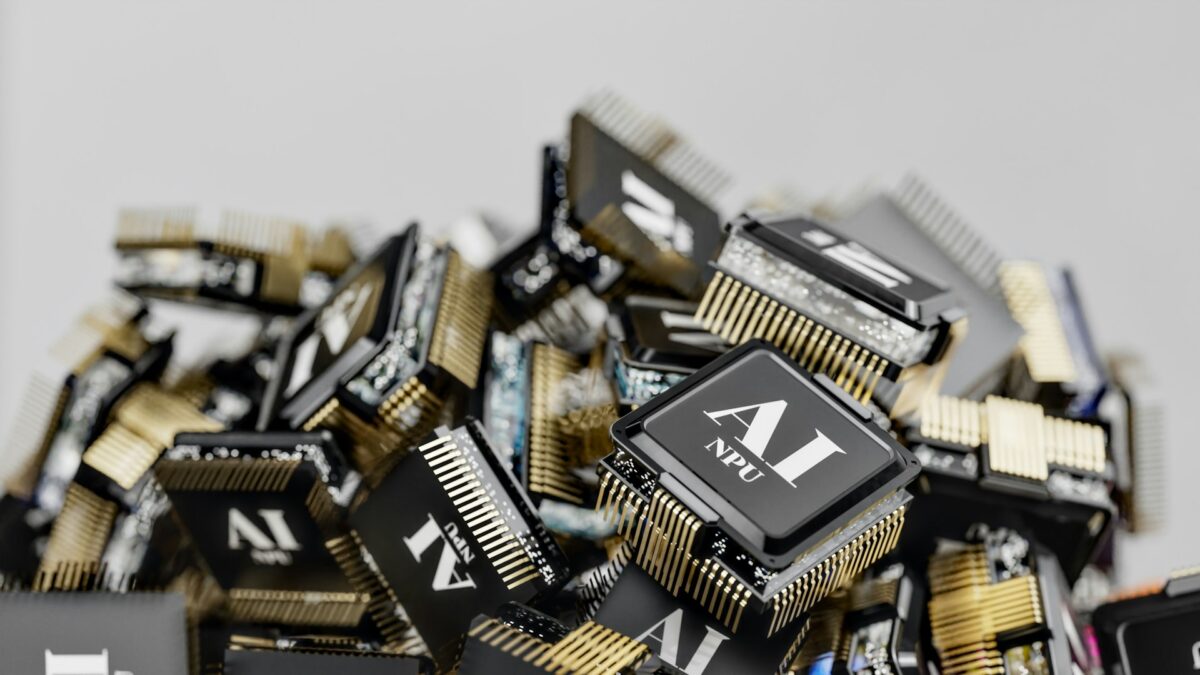
The AI chip rally has become one of the largest concentration trades in global markets, lifting semiconductor stocks, Asian indices and investor risk appetite at the same time.
What started as a boom around graphics processors has now spread across the wider semiconductor supply chain. Memory chips, CPUs, storage, networking equipment and advanced foundry capacity have all become part of the same market story. Artificial intelligence needs more computing power, and investors are betting that the industry cannot supply it fast enough.
That bet has produced extraordinary gains. Intel, once treated as one of the weakest names in the sector, has staged a sharp rebound. Sandisk has posted even larger gains. Micron has become one of the clearest examples of how quickly the cycle has changed, moving from pressure on margins to record profitability as memory demand tightened.
The rally has also reshaped major indices. Semiconductor companies in the S&P 500 have added trillions of dollars in market value in a short period, according to market reports. In South Korea, the KOSPI has surged as Samsung Electronics and SK Hynix became central to the global AI hardware trade.
AI demand is spreading beyond GPUs
The first phase of the AI trade centered on high-end GPUs. That phase is not over, but the market has moved beyond it.
Large AI models require a broader hardware base. Data centers need memory, processors, storage systems, networking chips and power-efficient infrastructure. That shift explains why investors are rewarding companies across the semiconductor chain rather than only the most visible AI chip designers.
Broadcom has benefited from demand for custom AI chips and networking infrastructure. TSMC remains central because advanced AI chips depend on its manufacturing capacity. Micron has gained from tight memory supply, especially as AI servers require more high-performance memory.
This widening demand makes the rally more durable than a simple speculative move. Companies are not only promising future growth. Many are already reporting stronger revenue, higher margins and rising order visibility.
This is not a no-revenue bubble
The semiconductor companies leading the rally are not empty internet names with weak balance sheets and vague business models. They produce critical hardware, sell into real demand and report real profits. AI infrastructure spending is already moving through corporate capital budgets, cloud providers, chipmakers and equipment suppliers.
That makes the current boom different from the late 1990s. The problem is not that the business case is fictional. The problem is that markets may be pricing today’s shortage as if it will remain permanent.
Chip cycles have always turned. Capacity expands. Customers adjust. Prices fall when supply catches up. The question is whether AI demand can grow fast enough to absorb the enormous investment now being made in fabs, memory production and data center infrastructure.
Scarcity is supporting valuations
Advanced semiconductor capacity cannot be built quickly. New fabs take years. Clean rooms, equipment, skilled labor and supply chains all create bottlenecks. Leading-edge manufacturing remains concentrated in a small number of companies, while demand from cloud giants continues to rise.
That supply constraint gives chipmakers pricing power. It also supports the idea that shortages may last longer than a normal semiconductor upcycle. Investors are not only buying earnings growth. They are buying limited capacity.
But scarcity can be dangerous when it becomes a valuation assumption. If investors start treating temporary supply pressure as a permanent condition, the market becomes vulnerable to even small changes in demand expectations.
A slowdown in AI capital spending would not stay inside the chip sector. It would affect technology valuations, Asian equity markets, retail investor positioning and broader risk appetite. Semiconductor concentration has become large enough to matter for the global market cycle.
The real risk is duration
The AI chip rally still has a stronger foundation than the dot-com boom. Demand is real. Profits are real. Supply constraints are real.
But the valuation test is getting harder.
Markets are no longer asking whether artificial intelligence needs more chips. It does. The harder question is whether chipmakers can keep today’s margins, shortages and growth rates intact long enough to justify the scale of the rally.
If AI spending keeps rising and supply remains tight, semiconductor stocks can continue to lead global markets. If capacity catches up faster than expected, or if customers slow their infrastructure budgets, the same trade could reverse quickly.
The risk is not that AI does not need chips. The risk is that markets have already priced today’s chip shortage as a permanent condition.