
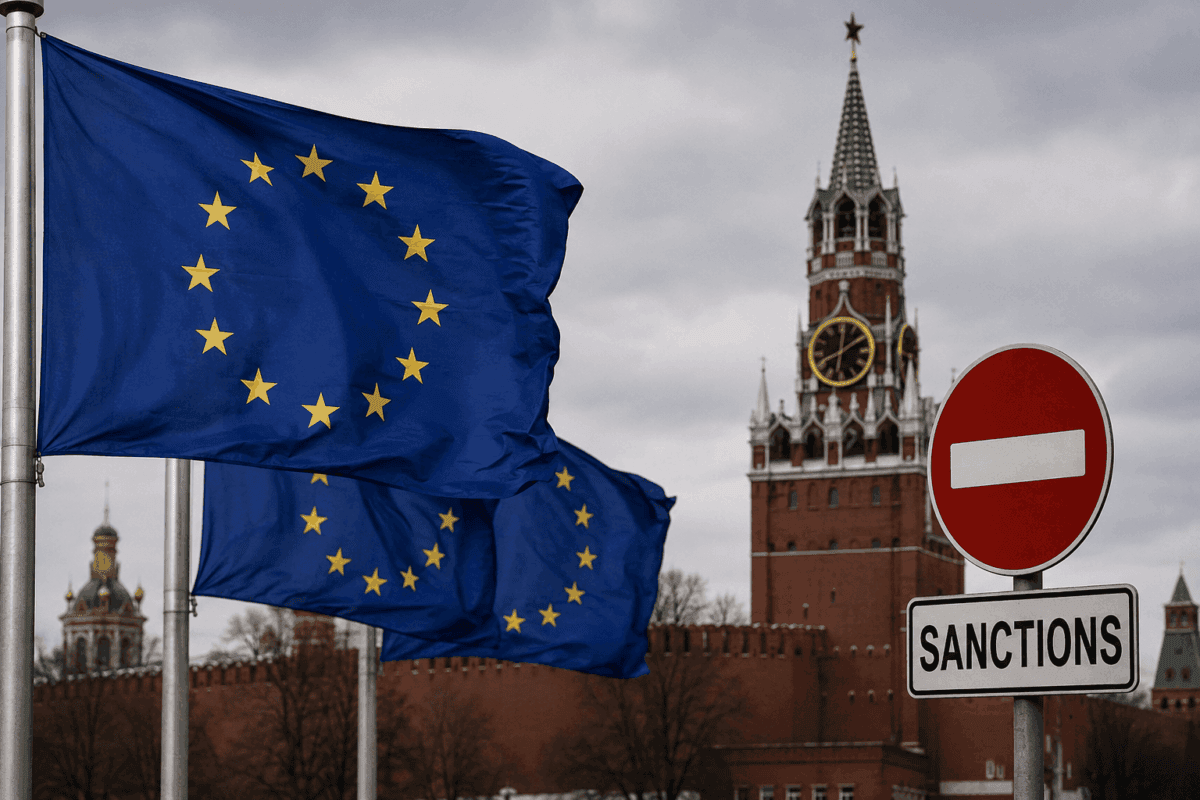
The EU has adopted its 21st sanctions package against Russia, targeting the financial, energy and defense networks supporting Moscow’s war in Ukraine.
The measures add 218 individuals and entities to the EU sanctions list. European officials described the package as the bloc’s most extensive in four years.
Approved after weeks of negotiations among member states, the package focuses not only on Russian institutions but also on foreign banks, cryptocurrency platforms and shipping companies accused of helping Moscow bypass existing restrictions.
Banks and cryptocurrency platforms targeted
The financial sector faces some of the package’s most extensive restrictions.
The EU has frozen the assets of 94 banks and major financial institutions. Another 33 Russian financial organizations have been placed under transaction bans, preventing European companies and individuals from conducting business with them.
The restrictions also reach beyond Russia. Four banks based in third countries were targeted for allegedly helping Russian entities evade sanctions.
Fourteen cryptocurrency platforms were added to the measures for providing services used to move or conceal Russian funds.
The EU has also established a mechanism allowing it to impose wider transaction bans on third countries that host cryptocurrency services used by Russia to circumvent sanctions.
The measure marks an effort to close financial channels that have emerged outside the conventional banking system since earlier restrictions were imposed.
Another 41 shadow fleet vessels sanctioned
The package adds 41 vessels linked to Russia’s so-called shadow fleet to the sanctions list, bringing the total number of targeted ships to 673.
The fleet includes tankers and support vessels used to transport Russian oil while avoiding Western price controls, insurance restrictions and disclosure requirements.
The latest measures extend beyond individual vessels to companies providing fuel, crews and logistical services. By targeting the wider support network, the EU aims to make it more difficult and expensive for Russia to operate ships through opaque ownership structures and alternative registries.
Nineteen individuals and entities connected to the oil sector were also listed. They include three refineries in Russia and a major refinery in Belarus.
The EU also decided to freeze the mechanism used to adjust the price cap on Russian oil for one year. The move is intended to prevent sudden market changes from increasing the revenue Russia can earn while using European shipping, insurance and financial services.
Enforcement, however, remains a central challenge. The effectiveness of the restrictions will depend on the ability of European authorities to identify vessel ownership, monitor insurance arrangements and trace payments routed through intermediaries outside the EU.
Defense companies and drone suppliers added
The sanctions also target 56 individuals and entities linked to Russia’s defense industry.
Those listed include key actors involved in the production of long-range drones used in attacks against Ukrainian cities and infrastructure.
Further export controls cover components and technologies that may have both civilian and military applications. These include microelectronics, manufacturing equipment, signal-jamming systems and parts used in missiles and unmanned aerial vehicles.
The measures are designed to restrict not only Russian arms manufacturers but also companies operating in third countries that supply them with machinery, electronic components and other critical materials.
EU foreign policy chief Kaja Kallas said the package strikes at the financial system, military-industrial complex and energy sector that enable Russia to continue the war.
She said the sanctions also respond to Russian attacks on civilians, infrastructure and cultural heritage in Ukraine.
Greece secures temporary LNG exemption
The most serious opposition during negotiations came from Greece, whose shipping industry plays a major role in the global transportation of liquefied natural gas.
Athens objected to restrictions that would prevent European companies from carrying Russian LNG to markets outside the EU. Greece argued that such a ban could shift the trade to competitors in other countries without significantly reducing Russian export revenue.
Under the final compromise, Greece received a one-year exemption allowing certain shipments of Russian LNG to non-EU markets to continue.
The broader ban on Russian LNG entering the European Union is still expected to take effect at the beginning of 2027.
The dispute highlighted the difficulty of balancing pressure on Moscow with the commercial interests of EU member states, particularly in sectors where European companies hold a large share of the global market.
The 21st package reflects a wider shift in the EU’s sanctions strategy. Rather than focusing only on major Russian companies, Brussels is increasingly targeting the foreign banks, cryptocurrency providers, ship operators and technology suppliers that keep Russian trade moving.
Its impact will now depend on whether those networks can be disrupted before Moscow replaces them with new financial intermediaries, shipping routes and suppliers.