
South Korea has announced emergency restrictions on high-risk investment products after a two-day stock market collapse erased as much as $2.18 trillion from the value of Seoul-listed companies.
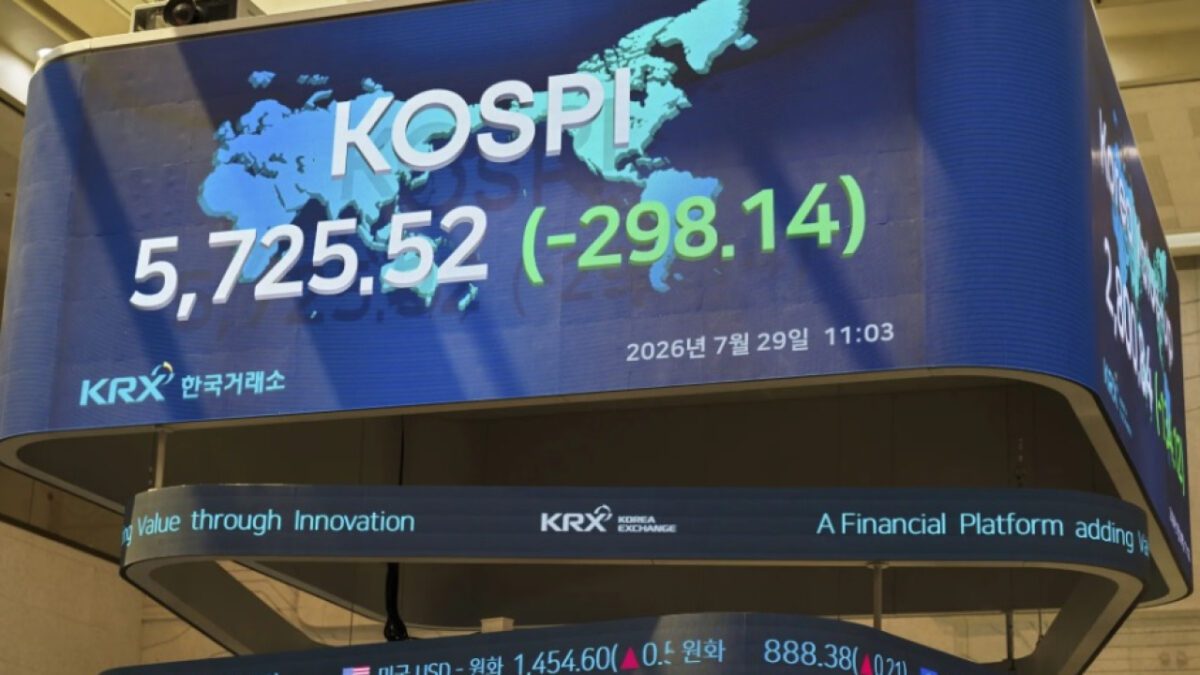
The benchmark KOSPI closed 5.98 percent lower on Wednesday after plunging 10.84 percent in the previous session. The index fell as much as 12.6 percent during trading, triggering a 20-minute market halt, and has now lost almost 40 percent from its late-June peak.
Following an emergency meeting led by Finance Minister Koo Yun-cheol, authorities said they would immediately tighten controls on single-stock leveraged exchange-traded funds.
The proposed measures include limiting an individual’s holdings in the products to as little as 20 percent of their total investment assets, raising transaction costs and requiring investors to complete simulated trading exercises. The government also plans to create a legal framework allowing regulators to intervene during periods of extreme market instability.
Single-stock leveraged ETFs are designed to multiply the daily gains or losses of an individual company’s shares. While they can deliver rapid returns when prices rise, they can also accelerate losses and forced selling during sharp declines.
South Korea introduced domestically listed versions of the products on May 27. Demand grew rapidly among retail investors seeking greater exposure to major chipmakers, prompting concerns that leveraged trading was increasing volatility and concentrating risk in a small number of companies.
The selloff intensified after SK Hynix reported record quarterly earnings that still fell short of elevated market expectations. Its shares dropped nearly 20 percent before closing 9.6 percent lower. Samsung Electronics ended the session down 5.2 percent.
Together, the two semiconductor companies account for more than half of the KOSPI’s market value, giving their price movements an outsized influence over the wider market.
Koo apologized in parliament, acknowledging that the leveraged products should have received more careful scrutiny before their introduction.
Regulators have already suspended new listings and advertising for single-stock leveraged products. A previously announced rule requiring investors to hold at least 30 million won in cash will take effect on July 31.
Authorities said South Korea’s financial markets would remain under 24-hour surveillance and that additional stabilization measures could be introduced if volatility continues.