
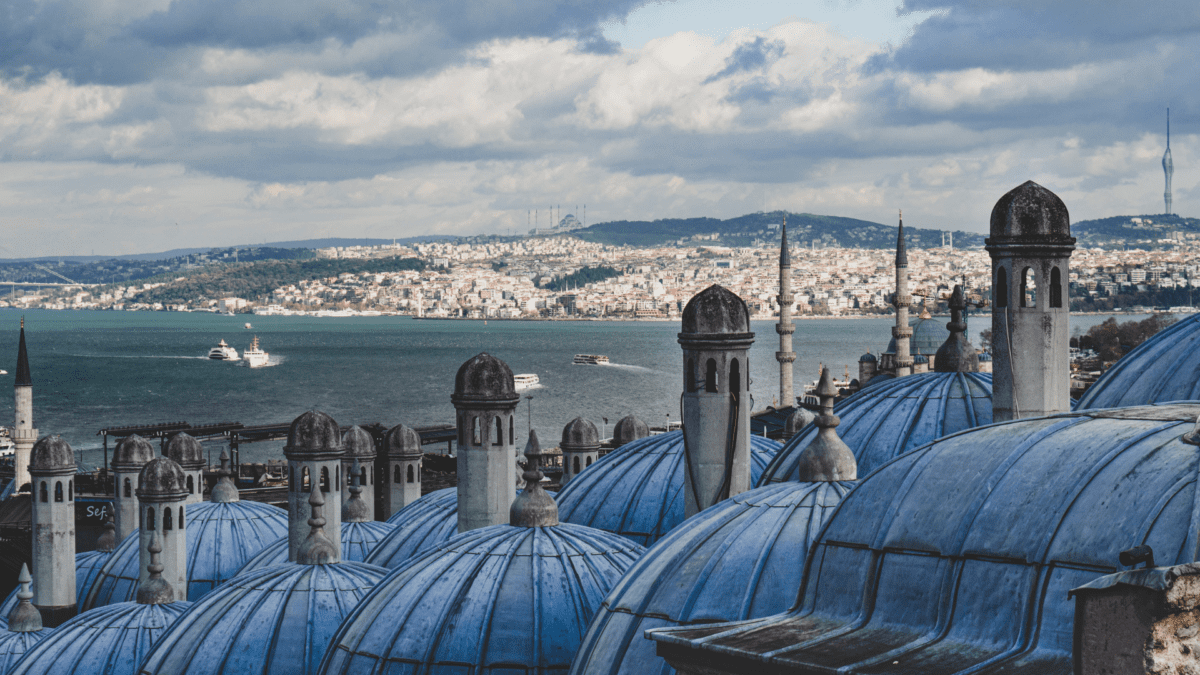
Six multilateral development banks have committed $6.75 billion to build a 127-kilometer high-capacity railway line across the Bosphorus in Istanbul.
The Istanbul North Rail Crossing Project, known as INRAIL, aims to remove the Bosphorus bottleneck and position Turkey within the global logistics system.
The Bottleneck Problem
Turkey’s geography is its greatest asset and its biggest constraint. Rail freight crossing the Bosphorus currently moves through the Marmaray tunnel, a system built primarily for passenger commuters. Freight trains use it only during limited nighttime hours, according to Turkey’s Ministry of Transport.
As a result, annual rail freight capacity across the strait sits at around 3 million tons. However, for a corridor connecting European markets to Central Asia, the Gulf, and beyond, that figure does not reflect the route’s strategic importance.
INRAIL directly addresses the constraint. Once operational, it will raise rail freight capacity across the Bosphorus from about 3 million tons a year to as much as 50 million tons, a more than fifteenfold increase, according to the World Bank.
The Financing
The World Bank approved a $2 billion loan for INRAIL on March 31, 2026, leading a coordinated financing effort by six multilateral development banks that collectively committed $6.75 billion. Total project cost is estimated at approximately $8.3 billion.
Turkish Treasury and Finance Minister Mehmet Şimşek and World Bank Managing Director of Operations Anna Bjerde signed the financing agreement during the IMF and World Bank spring meetings in Washington. Şimşek described it as the third-largest project ever approved by the World Bank.
The financing effort brings together a broad group of lenders, including the World Bank, Asian Infrastructure Investment Bank, Asian Development Bank, Islamic Development Bank, OPEC Fund for International Development, and the European Bank for Reconstruction and Development.
The Middle Corridor Connection
The project’s commercial logic extends beyond Turkey’s domestic network. Şimşek said INRAIL will remove one of the most critical bottlenecks along the Middle Corridor, currently the fastest trade route connecting Beijing to London, with a transit time of 18 days.
The Russia-Ukraine war disrupted the Northern Corridor. Rising risk in the Red Sea has complicated maritime alternatives. The Middle Corridor has gained strategic attention, but its throughput has been limited by the Istanbul crossing constraint. INRAIL targets that constraint directly.
The Broader Infrastructure Play
The new line will connect Istanbul Airport on the European side and Sabiha Gökçen Airport on the Asian side to each other and to the national rail network for the first time.
About half the alignment runs through tunnels, reducing exposure to weather disruptions.
INRAIL will generate up to 414,000 better-paying jobs, including as many as 99,000 new positions, across communities along Turkey’s national and international rail corridors.
What It Requires to Work
Infrastructure alone does not build a corridor. Customs alignment, tariff consistency, and transit agreements with neighboring countries determine whether increased physical capacity translates into actual trade flow. The Middle Corridor crosses multiple jurisdictions, each with its own regulatory environment.
Turkey is simultaneously deepening ties through the Organization of Turkic States and advancing the Iraq Development Road project, both of which feed into the same strategic framework. Whether those threads hold together will determine how much of INRAIL’s capacity gets used.