
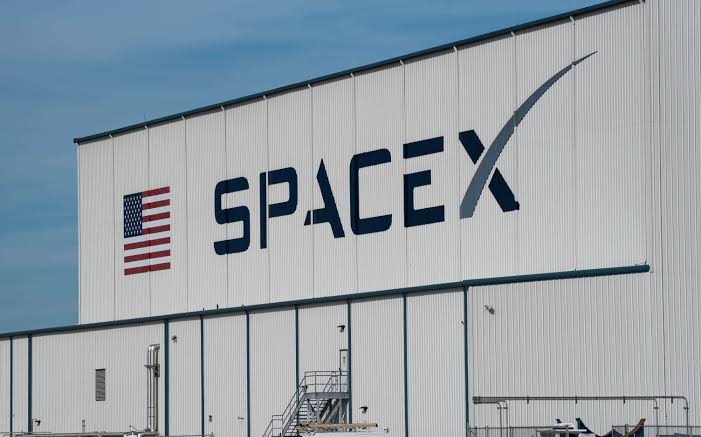
Nearly $1 trillion has been wiped from SpaceX’s market value in about a month. The postponement of a Starship launch because of engine problems accelerated the sell-off, but the deeper issue may be the extreme valuation created after the company’s initial public offering.
SpaceX shares fell to around $124 after reaching $225.64 in June. The stock slipped below its $135 IPO price, while the company lost roughly one-third of the $2.64 trillion valuation it reached at its peak.
Starship was a trigger, not the main cause
Starship’s 13th test flight was halted shortly before launch after four of the Super Heavy booster’s 33 engines failed to ignite. SpaceX said it planned another attempt after replacing two Raptor engines.
The cancellation erased an estimated $100 billion from the company’s market value. However, SpaceX shares had already been retreating sharply before the Starship problem emerged.
The engine failure did not cause the entire $1 trillion decline. It instead gave investors another reason to sell a stock that was already under pressure.
Starship still remains central to the company’s long-term strategy. SpaceX’s next generation of Starlink satellites, direct-to-phone connectivity and proposed orbital artificial intelligence infrastructure all depend heavily on the rocket becoming reliable enough for regular launches.
SpaceX remains expensive despite the sell-off
The sharp fall in the share price has not made SpaceX cheap by conventional valuation standards. Even after the decline, the company was trading at about 49 times estimated revenue. Tesla, by comparison, had a revenue multiple of roughly 15.
The premium reflects expectations surrounding Starlink’s growth, SpaceX’s dominance in reusable rockets and the new markets that Starship could eventually create.
The company’s financial results also show that SpaceX can no longer be assessed solely as a launch and satellite business.
xAI, which was incorporated into SpaceX, generated $818 million in revenue during the first quarter of 2026 but recorded an operating loss of $2.47 billion. Starlink produced an operating profit of $1.19 billion over the same period. SpaceX reported a total operating loss of $1.94 billion.
The figures suggest that cash generated by the company’s satellite and space operations is increasingly being used to finance its artificial intelligence ambitions.
Wall Street targets range from $115 to $800
Analysts remain deeply divided over SpaceX’s value.
Raymond James set a price target of $800, while CFRA placed its target at just $115. Of the 32 analysts covering the stock, 27 rated it a buy, four recommended holding it and one advised selling.
Morningstar had previously calculated SpaceX’s fair value at $780 billion. The firm argued that xAI’s economic model and projects such as orbital data centres had not yet been commercially proven.
The unusually wide gap between analyst forecasts shows that valuations are based less on SpaceX’s current earnings than on future scenarios.
The company’s market value therefore depends not only on its existing revenue, but also on investor confidence that Starship will succeed and that its AI investments will develop into a new global infrastructure business.
The real market test may come in August
Less than 5 percent of SpaceX shares began trading during the IPO. Limited supply, strong demand from retail investors and the company’s rapid inclusion in the Nasdaq-100 helped push the share price higher.
That balance may change after the company reports its second-quarter results.
Trading restrictions are expected to expire on 911.5 million shares held by employees and early investors. A further 455.8 million shares could become eligible for sale if certain price conditions are met.
Not all of these shares are expected to be sold. However, a significant increase in available supply could reduce the scarcity that supported the stock after the IPO.
The nearly $1 trillion decline does not mean that SpaceX has lost its technological lead in the space industry. It does show that investors are beginning to question how quickly Elon Musk’s vision can be converted into revenue, profit and sustainable cash flow.
A successful Starship flight could produce a short-term rebound. SpaceX’s more durable valuation will depend on its financial results and on how the market absorbs the additional shares expected to become tradable in August.